

CNC milling is often the quickest route from drawing to a finished, inspectable part. But it only stays “quick” when the supplier has the right machine envelope, tooling, and inspection set-up for your tolerances. Qimtek helps you share an RFQ once and compare responses from UK CNC milling suppliers who are actively quoting work like yours.
Understanding CNC Milling Services
What types of parts are a good fit for CNC milling?
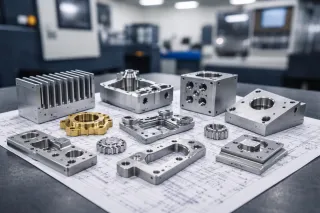
CNC milling suits parts where features are defined by flats, pockets, slots, profiles, drilled patterns, and precise datums. It is commonly used for brackets, housings, manifolds, plates, covers, jigs, fixtures, and prototypes that need repeatability. If you need CNC milled parts with multiple operations, milling also works well alongside turning, grinding, or EDM as part of a routed process.
On Qimtek, you can describe the function, specify critical dimensions, and attach drawings so suppliers can quote what you actually need. That helps you get cleaner CNC milling quotes and fewer back-and-forth questions.
- Best for: prismatic components, machined pockets, threaded holes, and complex hole patterns
- Common outputs: CNC milled custom parts for assemblies, test rigs, and production builds
- Typical batch sizes: one-offs through to repeat orders, depending on set-up and fixture time
Want multiple quotes without chasing? Post your RFQ here.
What types of milling do suppliers offer?
CNC milling covers a range of machine types. Many suppliers use 3-axis mills for simpler work, while 4-axis can reduce re-clamping and improve positional consistency. For complex geometry or features around multiple sides, 5-axis machining can cut lead time by combining operations in one set-up.
- 3-axis: strong for plates, pockets, and straightforward profiles
- 4-axis: useful for wrapped features or repeatable indexing
- 5-axis: ideal for complex faces, angled holes, and reducing set-ups
- Supporting processes: tapping, reaming, boring, engraving, and deburring
Need fast CNC milling quotes from UK shops? Upload your drawings here.
Which CNC milling materials are commonly available from UK suppliers?
Most UK machine shops quote a wide range of CNC milling materials. If you have a preferred grade, include it. If substitutes are acceptable, note that too.
- Aluminium: lightweight and fast machining
- Stainless: corrosion resistance and durability
- Plastics: low weight and insulation properties
- Mild steel, tool steel, brass, copper alloys, engineering polymers
Need pricing across materials? Post your RFQ here.

CNC Milling Costs, Lead Times, and Precision
What drives CNC milling cost and CNC milling price?
CNC milling cost is usually set by machine time, set-up effort, tooling, and inspection. Two parts that look similar can price very differently if one needs multiple fixtures or tight positional tolerances.
- Set-up and fixturing time
- Cycle time and tool changes
- Material yield and stock size
- Tolerance stack and inspection effort
- Finishing processes
Want to benchmark price quickly? Post your RFQ here.
Is CNC milling suitable for prototype and low-volume machining?
Yes - CNC milling is widely used for prototype and low-volume production work. It’s ideal when you need functional, end-use parts in the correct material to test fit, strength, or performance before committing to larger quantities.
For early-stage development, you might work with a supplier that specialises in prototype machining. These companies are typically set up for flexibility, quick turnaround, and engineering support. They’re used to evolving drawings, design tweaks, and smaller batch sizes.
In some cases, 3D printing can also be a good option for early prototypes, especially for visual models, form-and-fit checks, or lightweight testing. However, when you need production-grade materials, tight tolerances, or accurate surface finishes, CNC milling is often the better route.
On Qimtek, you can describe your project stage and required quantities, helping you connect with suppliers who specialise in prototype and low-volume machining.
Need a faster delivery option? Post your RFQ here.
What type of company should you use for production CNC machining?
For repeat or higher-volume production work, it’s often best to work with a supplier geared toward batch manufacturing. Production-focused machine shops typically have:
- Dedicated fixtures and workholding
- Process control systems
- Inspection procedures (CMM, SPC where required)
- Capacity planning for ongoing supply
Production volumes can vary significantly by sector, but generally:
- Low batch production: 50–500 parts
- Medium volume: 500–5,000 parts
- High volume: 5,000+ parts (sometimes much higher depending on industry)
If your parts are likely to repeat, it’s worth considering long-term supply stability, quality systems (such as ISO certifications), and whether the supplier has capacity for scaling up.
Posting one RFQ through Qimtek allows you to compare suppliers suited to either prototype or production work — helping you match your project stage with the right type of machining partner.
Want confident tolerance pricing? Upload your drawings here.
Sourcing CNC Milling Through Qimtek
How does Qimtek help you find the right CNC milling company?
Qimtek connects buyers directly with UK CNC milling companies actively quoting work - by posting jus one RFQ you will receive multiple CNC milling quotes.
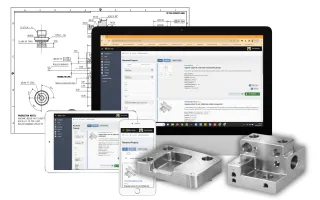
- Upload drawings once
- Specify materials, quantities, and tolerances
- Receive multiple matched supplier responses
There are no intermediaries. You deal directly with the CNC milling company that fits your requirements.
Want suppliers to come to you? Post your RFQ here.
Can I run an NDA with my CNC milling project?
Yes. If confidentiality is important for your CNC milling project, you can put a Non-Disclosure Agreement (NDA) in place before sharing detailed drawings or sensitive technical information. Many suppliers are accustomed to working under NDA, particularly for new product development, proprietary designs, or commercially sensitive components.
You can indicate your confidentiality requirements when posting your RFQ, helping ensure that discussions only proceed once the appropriate agreements are in place.
What information should I include in my CNC milling RFQ?
- CAD files (STEP preferred)
- Material grade
- Quantity
- Critical tolerances
- Required finishes
- Delivery postcode and deadline
If you are looking for CNC milling services in the UK, Qimtek provides a practical way to compare CNC milling companies and receive competitive quotes.
Upload your drawings, review supplier responses, and choose the precision CNC machining service that fits your requirements.