

Finding the right supplier for bent tube parts is not only about machine capacity. It is about knowing who can hold the right bend quality, work with your material, manage repeatability, and deliver on time. A simple handrail tube, a tight radius stainless assembly, and a production run of formed tube components can all need different tooling, handling, and inspection standards.
Qimtek helps you reach UK manufacturers that suit the job more closely. Instead of sending the same RFQ to one company at a time, you can upload drawings once and compare quotes from suppliers already offering the tube bending service, capacity, and commercial fit you need.
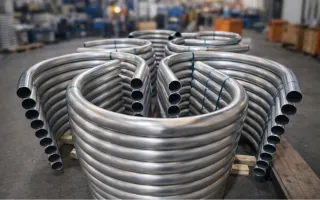
Understanding Tube Bending Services
What is tube bending and what is it used for?
Tube bending is a manufacturing process used to form metal tube into a required shape without cutting and welding multiple straight sections together. It is widely used where strength, appearance, flow, or space-saving layout matter. In many cases, bending the tube is a more efficient and consistent option than fabricating the same form from separate pieces.
- Tube bending is commonly used for:
- Frames and support structures
- Handrails and guards
- Exhaust and automotive components
- Fluid lines and pipework assemblies
- Furniture and display products
- Brackets, cradles, and general fabricated parts
Many bent parts also need further processing after the bend stage. This can include cutting, drilling, notching, end forming, welding, or tube laser cutting where holes, slots, or profile features need to be added to the tube. For buyers, that means the best supplier is not always the one with bending capacity alone, but the one that can support the full route your part requires.
Need quotes from matched suppliers? Get quotes now.
What types of parts and industries use tube bending?
Tube bending is used across a wide range of industries because bent tube can provide strength, repeatability, and a cleaner finished assembly than multi-piece fabrication. Some parts are purely functional, while others need a more controlled finish where appearance matters as much as fit.
Common tube bending applications include:
- Handrails, frames, and guards
- Chassis and structural supports
- Exhausts and automotive tube assemblies
- Conveyor, machinery, and equipment parts
- Furniture, retail, and display components
- Process tube parts and fluid handling assemblies
- The industries using tube bending services often include:
- General manufacturing
- Automotive and transport
- Construction and infrastructure
- Food and process equipment
- Furniture and interiors
- Agricultural and commercial equipment
Some jobs only need straightforward bends in mild steel tube. Others involve stainless parts with cosmetic requirements, complex formed shapes, or assemblies that also need tube laser cutting, coping, welding, or finishing. That is why supplier fit matters. A company suited to one-off handrail sections may not be the right match for repeat production components with tighter control requirements.
Qimtek helps buyers compare UK suppliers based on the type of bent tube parts they need, whether that is a prototype frame, a production assembly, or a more specialised fabricated component.
Want better-fit tube bending quotes? Get quotes now.
What materials and tube sections can be bent?
A wide range of tube materials and section types can be bent successfully, but the final result depends on more than the material name alone. Diameter, wall thickness, bend radius, temper, and section shape all affect how the tube behaves during forming. A supplier that is well suited to mild steel structural work may not be the best fit for thin wall stainless or lighter aluminium sections.
Common tube bending materials include:
- Mild steel for frames, supports, and general fabrication
- Stainless steel for corrosion resistance, hygiene, or visible finish
- Aluminium where lower weight matters
- Many suppliers can also bend:
- Round tube
- Square tube
- Rectangular tube
- In some cases, oval or other specialist sections
The practical bending limit depends on the section size, wall thickness, and the level of shape retention required after forming. Thin wall material, tight radii, and visible parts often need more process control. It also helps to say whether the part needs additional operations such as notching, drilling, end forming, or tube laser cutting, especially where cut features must align accurately with the bend position.
Qimtek helps you compare tube bending suppliers based on the actual material and section details in your RFQ, making it easier to reach companies suited to the work.
Need direct quotes without the legwork? Get quotes now.
When is CNC tube bending a better choice than manual tube bending?
Manual tube bending can be a practical option for simpler parts, lower quantities, or straightforward bends where speed of setup matters more than repeatable automation. CNC tube bending is usually the better choice when parts are more complex, when consistency matters across batches, or when the job involves multiple bends that must be held accurately in relation to one another.
CNC tube bending is often the stronger option when you need:
- Repeatability across production runs
- Multiple bends in one part
- Tighter control of angles and orientation
- Faster output at higher volumes
- Better consistency from first-off to batch production
- Reliable alignment with downstream operations
- Manual bending may still suit:
- Simple one-off parts
- Basic frames or handrail sections
- Lower volume jobs with limited bend complexity
- Development work where the design may still change
In practice, the right route depends on the drawing, quantity, tolerance, and finish requirement. A basic mild steel part with a few simple bends may not need a full CNC route. A more complex component with several bends, controlled orientation, and added features such as holes or slots is more likely to benefit from CNC tube bending, especially where tube laser cutting or secondary fabrication steps also need to line up accurately.
Through Qimtek, buyers can compare UK suppliers offering manual, CNC, or mixed tube bending capability, helping them choose the route that best fits the part and production requirement.
Need quotes for simple or complex bent tube parts? Get quotes now.
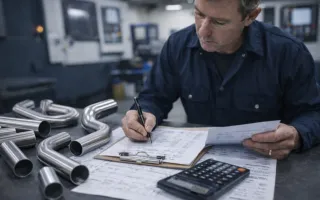
Costs, Lead Times, and Precision
What affects tube bending cost and tube bending price most?
Tube bending cost is shaped by a mix of technical and commercial factors. Buyers sometimes focus on bend count alone, but the biggest price changes often come from tooling, setup time, material handling, and what happens before or after the bend operation.
Typical cost drivers include:
- Tube material and section size
- Wall thickness and bend difficulty
- Number of bends and part complexity
- Need for CNC tube bending or specialist tooling
- Tolerance requirements and inspection level
- Prototype quantities versus repeat batch volumes
- Extra operations such as cutting, drilling, coping, welding, or finishing
Bent tube fabrication can look inexpensive at first glance, then change once secondary work is added. That is why it helps to compare several quotes side by side. Qimtek gives buyers a practical way to review tube bending price, lead time, and supplier feedback together, rather than trying to piece it all together across separate email chains.
Want multiple prices in one place? Get quotes now.
What lead times are realistic for tube bending work?
Tube bending lead times vary with tooling readiness, material availability, quantity, and how complete the RFQ is. A simple repeat part with existing tooling may move quickly. A new part with tight tolerances, first article approval, or added fabrication steps will usually take longer.
Lead times are often influenced by:
- Whether tooling already exists or must be made
- Material stock position in the required grade and size
- Volume and batch scheduling
- Need for samples before production release
- Secondary operations and delivery planning
If delivery timing matters, include the required date, postcode, and whether split deliveries or staged call-offs are acceptable. Qimtek helps you compare tube bending service options from suppliers who can comment directly on capacity and timing, which is useful when you are balancing urgency against price.
Need quicker quote comparisons? Get quotes now.
How should you specify tolerances and quality requirements for tube bending?
Tube bending tolerances should be clear enough for suppliers to quote accurately, but practical for the part function. Over-specifying every dimension can increase cost without adding value. Under-specifying can lead to quotes that are not based on the same assumptions.
Useful RFQ details often include:
- Critical bend angles and centreline dimensions
- Permitted ovality, flattening, or marking levels
- Datums for measurement and fit-up points
- Left and right hand variants if relevant
- Whether appearance matters as much as function
- Any checking fixture, sample approval, or inspection report needs
Precision tube bending work benefits from complete drawings and clear notes, especially where parts need to assemble without adjustment. Through Qimtek, buyers can share drawings, quantities, and quality expectations once, so suppliers are quoting from the same technical brief and can ask sensible follow-up questions before pricing.
Want cleaner RFQ responses? Get quotes now.
What approvals should you look for when choosing a tube bending supplier?
The approvals you need will depend on the part, the industry, and how the bent tube component will be used. Some jobs only need a supplier with sound general manufacturing controls and repeatable bending capability. Others may call for more formal quality systems, material traceability, inspection records, or welding approvals where the bent tube is part of a larger fabricated assembly.
- Things worth checking can include:
- Quality management systems such as ISO 9001
- Material certification and traceability where required
- Inspection and measurement capability for bend accuracy
- Welding approvals if the supplier is also fabricating assemblies
- Experience in your sector or with similar end-use parts
- Control of repeat production and batch consistency
- Ability to provide first-off reports or sample approval records
For simpler tube bending work, not every approval will be necessary. For more demanding jobs in sectors such as automotive, process equipment, construction, or regulated industrial supply, supplier controls can matter as much as bending capacity. That is especially true where the part also involves tube laser cutting, welding, assembly, or downstream inspection requirements.
Qimtek helps buyers compare UK tube bending suppliers that match the technical and commercial needs of the job, so you can focus on manufacturers whose capability and quality controls fit the requirement from the start.
Need quotes from suitable tube bending suppliers? Get quotes now.
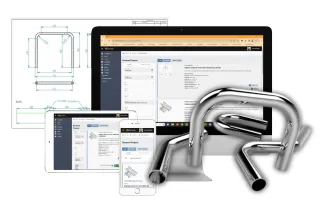
Sourcing Tube Bending Through Qimtek
How do you get useful tube bending quotes instead of rough budget figures?
The quality of a quote depends heavily on the quality of the RFQ. If suppliers only receive a sketchy description, they will either avoid quoting or build in more contingency. Better tube bending quotes usually come from a pack that answers the main manufacturing questions early.
A stronger RFQ often includes:
- 2D drawings or 3D files where available
- Material grade and section details
- Tube diameter, wall thickness, and bend radii
- Required quantity and forecast volume
- Tolerance and finish requirements
- Needed secondary operations
- Delivery postcode and target date
Using Qimtek means you do not need to repackage that information for each supplier one by one. You upload once, then compare responses from UK tube bending suppliers who can assess the job properly and quote on a like-for-like basis.
Want sharper quotes with less chasing? Get quotes now.
How do you choose between prototype support and ongoing production supply?
Some suppliers are set up for development work and short runs. Others are stronger on repeat production, call-off scheduling, and long-term supply. Neither is automatically better. The right choice depends on where you are in the job lifecycle.
For prototype and pre-production work, buyers often need:
- Fast feedback on manufacturability
- Willingness to handle lower quantities
- Flexibility on drawing revisions
- Clear communication during first-off approval
For ongoing production, the focus may shift towards:
- Repeatability across batches
- Stable lead times
- Capacity planning
- Commercial consistency over time
Qimtek helps you source tube bending services with that stage in mind. A buyer looking for one-off development parts may not need the same supplier profile as a team placing regular monthly orders for steel bending or formed stainless assemblies.
Need suppliers that fit the stage of the job? Get quotes now.
Why compare multiple tube bending suppliers through one enquiry?
Tube bending supplier choice affects more than price. It influences how quickly you get answers, how confidently a part can be made, and how smoothly the job moves from quote to delivery. Comparing multiple suppliers through one enquiry gives you a broader view of what the market can offer for your exact requirement.
That can help you assess:
- Commercial range across the same RFQ
- Different lead time positions
- Questions raised by experienced suppliers
- Which companies are most comfortable with the material and bend complexity
- Who can support bent tube fabrication beyond the forming step if needed
With Qimtek, buyers can deal direct with the suppliers that respond, while keeping the quoting process more organised. That makes it easier to shortlist, clarify, and move ahead with confidence when timing matters.