

Qimtek connects buyers with UK water jet cutting suppliers who can quote accurately from drawings for both prototype and production work. You receive competitive quotes, assess lead times and capability with confidence, and deal directly with the supplier you choose.
Upload your drawings to access a network of over 200 UK manufacturers. The service is completely free to use. If you have any questions, please get in touch.
Understanding water jet cutting and when it makes sense
What to expect from a water jet cutting service?
Water jet cutting uses a focused jet of water, often mixed with abrasive, to cut material by erosion rather than heat. That is why it is popular when you need a clean cut with little to no heat-affected zone. A high pressure waterjet can handle everything from thin gaskets to thick plate, depending on the machine and abrasive setup.
It is a practical choice when:
- You want to avoid distortion or hardening from thermal cutting
- You need complex profiles without tool changes
- You are cutting mixed jobs across different materials
- Edge quality matters and you want less secondary finishing
With Qimtek, you can reach UK workshops that run waterjet daily and know the common pitfalls. Post your RFQ through Drag Drop Source and you can compare suppliers by capability, lead time, and approach, not just the headline figure.
Want multiple quotes without chasing? Post your RFQ here.
What is the difference between abrasive waterjet and pure waterjet cutting?
Pure waterjet uses water only and is mainly used for softer materials like rubber, foam, textiles, and some plastics. Abrasive waterjet adds a mineral abrasive to the stream, which is what you need for metals and harder composites. If you are asking about water jet cutting steel, abrasive waterjet is the usual route.
When you create your RFQ on Qimtek, it helps to state:
- Material grade and thickness
- Whether you need abrasive or you are open to supplier recommendation
- Edge finish expectations (for example, rough cut vs fine cut)
- Quantity and repeat schedule
Many buyers are not sure which setup fits best. That is normal. The benefit of getting multiple water jet cutting quotes is that you will see how suppliers interpret the job, what quality level they price for, and what they suggest to reduce cost.
Do you need to find a suppllier who offers a water jet cutting service?
When should I choose waterjet over laser, plasma, or machining?
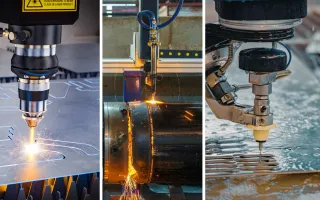
Waterjet is not “better” for every job, but it is often the best compromise when heat and material behaviour are concerns. Laser and plasma are fast and cost-effective for many steels, but they add heat. CNC machining gives tight tolerances and features like threads and pockets, but it can be slower and waste more material on simple profiles.
Waterjet is worth considering when:
- The part is heat-sensitive or cosmetic finish matters
- You need to cut thick material without thermal effects
- You are cutting laminates or composites that do not like heat
- You want a flexible process for prototypes and short runs
Qimtek makes the comparison simple. Upload once, then let multiple UK suppliers quote against the same drawing pack. You can choose based on cut quality, turnaround, and communication, not guesswork.
Get water jet, laser or plasma cutting quotes by uploading your drawings here.
Materials, accuracy and practical design questions
Can waterjet cut steel and other tough metals reliably?
Yes. Water jet cutting steel is a common use case, including mild steel, stainless, tool steels, and many alloys. The key variables are thickness, grade, and the quality level you need on the edge. Suppliers may adjust speed, abrasive flow, and nozzle setup to balance finish and cost.
If you want the best outcome, include in your RFQ:
- Steel grade and condition (hot rolled, cold rolled, plate)
- Thickness and any flatness requirements
- Whether the edge will be welded, coated, or used as-is
- Any critical dimensions or datums
Some jobs also benefit from leaving a small machining allowance on critical edges. A supplier quoting through Qimtek can advise if a quick skim pass in machining will reduce risk, especially on tight fits.
Upload your drawings to Drag Drop Source and post your RFQ.
How accurate is water jet CNC and what tolerances are realistic?
Most suppliers run water jet CNC systems with modern motion control, but accuracy still depends on thickness, nozzle wear, cutting speed, and the quality setting chosen. Waterjet can hold good tolerances for many industrial parts, but it is not always the right process for very tight fits without a secondary operation.
Typical factors that influence accuracy include:
- Taper on thicker cuts (managed by speed and setup)
- Kerf width and compensation
- Material movement or stress release during cutting
- Hole size relative to thickness
A practical approach is to mark critical features in your drawing and tell suppliers what matters. Qimtek’s Drag Drop Source makes that easy because you can attach notes and files in one place and keep the requirements consistent across all quotes. That way, you are comparing like for like.
Let us know how thick the material is when uploading your project here.
What file types and drawing details should I send for waterjet cutting?
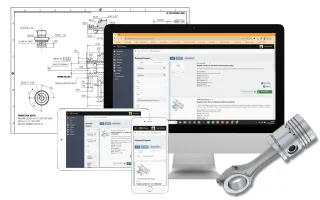
Clear input saves time and reduces questions. Most UK suppliers will accept DXF or DWG for profiles and a PDF for reference. If you also have a STEP file, it can help with context, especially if the part interfaces with others.
A useful waterjet drawing pack often includes:
- DXF with closed profiles and no duplicates
- Material spec and thickness on the RFQ
- Quantity and whether it is a one-off or repeat
- Notes on edge quality requirements
- Any “do not cut” areas, etch marks, or part IDs
- Preferred delivery date and delivery postcode
On Qimtek, you upload once and reuse the same pack across suppliers. That keeps your quoting process tidy and avoids version confusion. It also speeds up the route to confident water jet cutting quotes.
Upload your CAD files to Drag Drop Source and post your RFQ.
Pricing, lead times and getting quotes through Qimtek
What drives the water jet price and how can I control cost?
The water jet price is usually driven by cutting time, material cost, abrasive usage, and handling. Edge quality settings matter too. A slower, finer cut costs more than a faster rough cut. If you do not specify, suppliers may quote different quality assumptions, which makes comparison harder.
Common cost drivers include:
- Material type and thickness
- Total cut length and number of pierces
- Tolerance and edge finish expectations
- Nesting efficiency and sheet utilisation
- Deburring, marking, or protective film
- Packing and UK delivery requirements
To control cost, be clear about what is critical and where you have flexibility. Through Qimtek, you can invite multiple suppliers and quickly see how each one prices the same requirement. If one quote is far higher, it often highlights an assumption you can fix early.
Get multiple prices and improved lead times by uploading your project here.
What is a typical water jet machining price versus waterjet cutting only?
People often use “waterjet cutting” and “waterjet machining” interchangeably, but suppliers may interpret them differently. A water jet machining price can include extra steps beyond the cut, such as tighter inspection, deburring to a defined standard, etching part numbers, or basic finishing. Some shops also bundle follow-on CNC machining if your parts need pockets, threads, or precision bores.
When comparing quotes, check whether the price includes:
- Cut only vs cut plus deburr and clean
- Inspection level (basic check vs report)
- Labelling and traceability needs
- Packaging standard for transport and handling
- Any secondary ops or subcontract steps
Qimtek makes it easier to spot these differences. Suppliers can respond with clear scope notes, and you can ask clarifying questions in one thread. That helps you compare the true water jet machining price and avoid surprises after the order is placed.
Get multiple quotes for water jet machining projects by uploading your drawings here.
How fast can I get water jet cutting quotes and what lead times should I expect in the UK?
Lead time depends on capacity, material availability, and how complex your job is. Some suppliers can turn around simple profiles quickly, while thicker plate, fine edge quality, or high quantities can push the schedule out. Delivery also matters, especially for larger sheets or heavy parts.
To speed things up:
- Send clean DXF files and a clear spec
- Confirm material is to be supplied by you or by the supplier
- State your required-by date and delivery postcode
- Flag any must-hold dimensions or features
- Mention if you are open to split deliveries
On Qimtek, you can post your RFQ and receive multiple water jet cutting quotes without contacting each shop one by one. Because suppliers are verified and used to quoting through the platform, you often get quicker, more consistent responses. You still deal direct once you choose, so you can confirm dates and delivery details with the supplier that best fits your schedule.
Get mulitple quotes fast and see how quick you can receive your components.