

When you need more than cut and bent parts, a single supplier that can take a job from raw material through fabrication, finishing, assembly and delivery can save a lot of time. Full turnkey fabrication suits buyers who want fewer handovers, less supplier coordination and a clearer route from drawing to finished build. It is often the practical choice for welded fabrications, frames, enclosures, brackets, machine bases and other fabricated metal products that need to arrive ready for use, installation or onward assembly.
For procurement teams and engineers, the value is not only convenience. It is also about control. A well-managed turnkey fabrication project reduces communication gaps, keeps responsibility clear and helps avoid the delays that happen when work is split between too many suppliers. Through Qimtek, you can compare UK suppliers that match your drawings, quantities and delivery needs, then deal direct on the details that matter.
Understanding Turnkey Fabrication Services
What is included in a turnkey fabrication service?
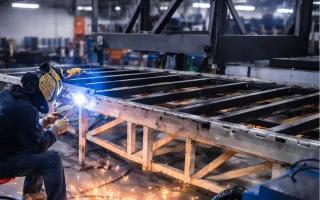
Turnkey fabrication services usually cover the full route from quotation to finished delivery. That can include material sourcing, cutting, folding, machining where needed, welding, finishing, inspection, assembly, packing and dispatch. Instead of managing several subcontractors yourself, you place the requirement with one supplier that takes ownership of the complete fabrication project.
This can be especially useful where fabricated metal assemblies need several linked stages to be planned properly. A supplier handling the full job can review the drawing pack early, flag production risks, suggest practical changes and sequence the work to reduce waste and rework. That is often more efficient than buying separate operations one by one.
- Material procurement and traceability
- Laser cutting, sawing, folding or rolling
- Welding and fabrication
- Secondary machining where required
- Surface finishing such as powder coating, plating or painting
- Mechanical assembly and packing
- Inspection, certification and delivery planning
With Qimtek, you can present the whole requirement up front so suppliers quote on the real scope rather than a partial process. That makes comparison easier and helps you spot who is best suited for supplier-managed fabrication rather than simple part supply.
Need several quotes without the chasing? Get quotes now.
When does full turnkey fabrication make more sense than buying separate processes?
Full turnkey fabrication tends to make the most sense when the job has multiple operations, tight delivery requirements or a higher risk of mismatch between stages. If a fabricated assembly needs welding, inserts, coating and final assembly, it is usually simpler to source that as one managed package. The same applies where components must fit together first time on site or as part of a larger machine build.
Buying each stage separately can work for very simple requirements, but it often adds admin, transport, inspection steps and more chances for responsibility to become blurred. If a problem appears after coating or final fit-up, it matters whether one supplier owns the whole job or whether several parties each handled a small part of it.
Turnkey manufacturing projects are often a good fit when you need:
- One point of contact for the whole build
- Better coordination between fabrication and finishing
- Reduced handling and transport between subcontractors
- Clear accountability for quality and delivery
- Support with repeat orders after prototype approval
Qimtek helps by putting your RFQ in front of suppliers that already work across complete fabrication projects, so you are less likely to waste time with companies geared only for single-process work.
Looking to compare capable suppliers fast? Get quotes now.
What kinds of parts and assemblies are suited to turnkey fabrication?
Turnkey fabrication is commonly used for products that need more than one manufacturing discipline but still need practical control over cost and lead time. That includes frames, housings, guards, skids, access platforms, support structures, cabinets, brackets, welded fabrications and fabricated assemblies supplied with bought-in items fitted.
It can also suit low to medium volume work where a buyer needs a supplier that can handle prototypes, pre-production builds and steady repeat batches without changing source every time the requirement grows. Complete fabrication projects often benefit from early review of tolerances, weld access, material choice and finishing method before production begins.
Typical materials can include mild steel, stainless steel and aluminium, with the final route depending on the job’s environment, loading, finish and budget. In many cases, a full-service fabrication supplier can also advise whether certain features should be machined, folded, welded or redesigned for easier manufacture.
Through Qimtek, you can source suppliers for turnkey fabrication that understand both the build itself and the buying pressures around delivery, documentation and repeatability.
Want matched quotes for your build? Get quotes now.

Costs, Lead Times, and Precision
What affects the cost of turnkey fabrication services?
Cost is shaped by more than material and labour alone. With turnkey fabrication, the quoted price reflects how the whole job is planned and managed. A simple fabricated bracket assembly with a standard finish is very different from a larger welded frame that needs machining after fabrication, bought-out components fitted, test assembly and staged delivery.
Main cost drivers usually include:
- Material type, thickness and availability
- Number of separate components in the assembly
- Weld content and fabrication complexity
- Machining, inserts, threads or tapped features
- Surface finish and cosmetic requirements
- Inspection, certification or documentation
- Packaging, palletisation and delivery postcode
- Prototype quantity versus repeat production volume
A good RFQ makes a big difference. If you provide drawings, quantities, finish requirements, tolerances and delivery expectations at the start, suppliers can quote more accurately. Qimtek helps you reach UK suppliers that can review the full scope, which gives you a better basis for comparing price against real capability, not just headline cost.
Want clearer pricing from the start? Get quotes now.
How do lead times work for complete fabrication projects?
Lead time depends on the route, not just the fabrication stage. A supplier managing the whole project must plan materials, shop capacity, subcontract finishing if needed, inspection and delivery. That sounds longer on paper, but in practice it can be faster than moving the job between separate suppliers because handovers are reduced and scheduling is centralised.
For urgent work, it helps to separate what is fixed from what is flexible. If the delivery date is firm but the finish or packaging method can vary, say so in the RFQ. If prototype parts are needed first and the balance can follow later, suppliers can often structure the job around that.
Lead times are often influenced by:
- Raw material stock position
- Fixture or tooling requirements
- Welding and inspection load
- External finishing turnaround
- Assembly complexity
- Quantity splits and call-off needs
Qimtek gives buyers a practical route to compare suppliers on lead time as well as price. That matters when one supplier can deliver a complete build in two weeks and another can only start fabrication in that time.
Need faster options from UK suppliers? Get quotes now.
What tolerances and quality checks should you ask for?
Precision in turnkey fabrication is about using the right tolerances in the right places. Not every fabricated feature needs a tight machined tolerance, but critical interfaces, mounting points and assembled fits should be defined clearly. Over-specifying everything can raise cost without improving function, while under-specifying can create assembly problems later.
When requesting turnkey fabrication, it helps to identify:
- Critical dimensions that affect fit or installation
- Datum points for fabrication and inspection
- Flatness, squareness or alignment needs
- Weld appearance versus structural requirement
- Finish quality for visible surfaces
- Any inspection reports or certificates required
For fabrication and assembly services, quality planning matters just as much as fabrication skill. A capable supplier will review the drawing pack, pick up potential clashes and confirm how the job will be checked before dispatch. Through Qimtek, buyers can engage suppliers that are used to answering these questions before work starts, which is often where costly issues are prevented.
Need confidence on quality and fit? Get quotes now.
Sourcing Full Turnkey Fabrication Through Qimtek
What should you include in an RFQ for turnkey fabrication?
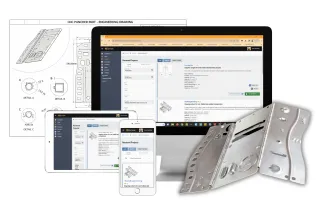
The more complete the enquiry, the more useful the quotes will be. For full turnkey fabrication, suppliers need to understand not just the part geometry but the complete commercial and technical requirement. Missing information often leads to delays, revised pricing or assumptions that do not match what you actually need.
A strong RFQ should include:
- 2D drawings and 3D files where available
- Material specification and finish requirements
- Assembly details and bought-in items if relevant
- Required quantities and expected repeat volumes
- Critical tolerances and inspection needs
- Delivery postcode and packing expectations
- Target date and any phased delivery requirement
If you need supplier-managed fabrication with final assembly included, say that clearly. If the supplier is expected to source standard fasteners, seals or hardware, list those items or provide a bill of materials. Qimtek makes it easier to submit that information once and compare multiple supplier responses without restarting the process each time.
Ready to send a stronger RFQ? Get quotes now.
How can you compare suppliers for full-service fabrication more effectively?
Comparing suppliers only on price can be misleading. A lower quote may exclude assembly, finishing, inspection or packaging that another supplier has already included. For full-service fabrication, the better comparison is often based on total scope, lead time, communication and the supplier’s ability to manage the whole job cleanly.
Good comparison points include:
- Whether the quote covers the full stated scope
- Experience with similar complete fabrication projects
- Realistic lead time and capacity
- Approach to drawing review and problem solving
- Clarity around subcontract finishing and quality control
- Willingness to deal direct on technical questions
Qimtek is useful here because it gives you multiple quotes from relevant UK suppliers, making it easier to compare like with like. You can then speak directly with the suppliers that look strongest for your build, rather than spending days trying to find suitable companies one by one.
Want better supplier comparisons quickly? Get quotes now.
Why use Qimtek to source turnkey manufacturing projects in the UK?
Sourcing turnkey manufacturing projects can be time-consuming when the requirement spans fabrication, finishing and assembly. You need suppliers that can do the work, quote clearly and deliver to the standard your business expects. Qimtek helps shorten that process by connecting buyers with UK suppliers suited to the requirement, while still letting you deal direct on technical and commercial detail.
That is useful whether you are buying a prototype build, a repeat batch or an ongoing supply arrangement. Instead of contacting individual companies one by one, you can upload your requirement and compare multiple quotes through one route. For buyers under time pressure, that can make the difference between a delayed project and a controlled sourcing process.
If you are ready to source turnkey fabrication, upload your drawings and requirements to Drag Drop Source and compare multiple quotes from UK suppliers that fit the job.