

Presswork can be one of the fastest and most cost effective ways to produce repeat metal parts, but only when the process, tooling, material, and supplier are right for the job. A simple bracket, cover, clip, washer, contact part, or formed pressing can all look straightforward on a drawing while needing very different production methods behind the scenes.
That is why sourcing matters. Qimtek helps you reach UK presswork manufacturers that suit your specification, batch size, material choice, and delivery needs. Instead of spending days chasing individual suppliers, you can upload your RFQ once, compare presswork quotes from multiple companies, and deal direct with the ones that fit.
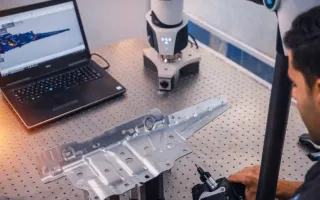
Understanding Presswork Services
What is the presswork process?
The presswork process uses a press machine and tooling to cut, shape or form metal parts from sheet, strip or coil. Depending on the part design, this can involve blanking, piercing, bending, drawing, coining, lancing or a combination of several stages in sequence. Some parts are produced in a single hit, while others move through progressive tooling where multiple features are formed as the strip advances through the die.
- A typical sheet metal presswork process may include:
- Material selection and strip or sheet preparation
- Tool setup and press configuration
- Blanking or piercing the base shape
- Forming, bending or drawing features
- Checking first-off samples and key dimensions
- Running production batches at repeat speed
- Deburring, inspection, packing or secondary operations if needed
The exact route depends on the material, part geometry, tolerances and expected volume. A simple flat washer needs a very different tooling approach from a formed bracket or deep drawn component. That is why early supplier input can be useful, especially where buyers are still deciding between prototype methods, hard tooling or full production presswork.
Need quotes for your presswork requirement? Get quotes now.
What kinds of parts are best suited to presswork?
Presswork is typically used for parts made from coil, strip, or sheet where speed and repeatability matter. It suits flat or shallow formed components that can be blanked, pierced, bent, lanced, drawn, or coined in a controlled sequence. Common examples include brackets, clips, tabs, covers, fixings, terminals, washers, enclosures, support plates, and other custom pressings used across industrial and commercial products.
It is often the right choice when you need:
- medium to high volumes
- consistent part-to-part repeatability
- fast cycle times once tooling is in place
- good control over hole positions and formed features
- a lower unit cost at production quantities
Prototype quantities can still be possible, but buyers should be realistic. A presswork service becomes more attractive as volumes rise and tooling cost can be spread across more parts. If your requirement is still at concept stage, Qimtek helps you compare suppliers that can advise whether a hard tool, soft tool, or alternate route makes more sense before you commit.
Want multiple quotes without chasing? Get quotes now.
Which materials are commonly used in sheet metal presswork?
Material choice affects forming behaviour, tool wear, springback, corrosion performance, and finished cost. Sheet metal presswork is commonly produced in mild steel, stainless steel, aluminium, copper, and brass. Some presswork manufacturers also handle coated steels, spring steels, and specialist alloys where the design and tooling allow for it.
Material selection usually comes back to the job:
- mild steel for general industrial parts and value
- stainless steel for corrosion resistance and hygiene-sensitive applications
- aluminium for lower weight and good formability
- copper for conductivity
- brass for electrical, decorative, or specialist fitting components
Buyers often assume material grade is enough, but finish condition, thickness tolerance, temper, and grain direction can all affect the result. Steel presswork in particular may need close attention where formed features, burr control, or cosmetic faces matter. When you send an RFQ through Qimtek, it helps to include the full material callout, expected finish, and whether substitutions are acceptable so suppliers can quote on a like-for-like basis.
Need matched suppliers fast? Get quotes now.
What sizes of parts can be made using presswork?
Presswork can cover a very wide size range, from small precision clips, washers, tabs and terminals through to much larger panels, brackets, covers and formed sheet metal components. The maximum part size depends on the press capacity, bed size, tooling design, material thickness and the complexity of the form. In practical terms, some suppliers specialise in very small pressed parts for high-volume production, while others are set up for much larger pressings used in industrial equipment, transport products or panel applications.
- Presswork size range can include:
- Small washers, contacts and clips
- Medium-sized brackets, covers and support plates
- Larger enclosures, guards and formed panels
- Heavier or wider pressings where larger presses and tools are available
The key point is that size is only one part of the decision. A relatively small part with tight tolerances and multiple forms may be more demanding than a larger, simpler pressing. Likewise, a part the size of a car door needs very different tooling investment and press capability from a small repeat bracket. That is why buyers should look at overall manufacturing fit rather than size alone.
Want to compare suppliers for small or large presswork parts? Get quotes now.
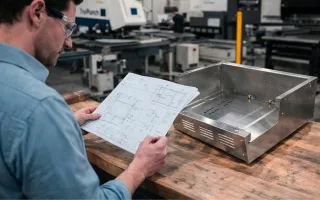
Costs, Lead Times, and Precision
What affects presswork cost and price?
Presswork cost is usually a mix of one-off setup or tooling investment and ongoing piece price. For repeat work, the unit cost can become very competitive, but the route to that result depends on the drawing and expected demand. Buyers comparing presswork price from different suppliers should check whether they are looking at the same assumptions.
Main cost drivers include:
- tooling complexity and number of stages
- material type, thickness, and scrap rate
- part size and press tonnage needed
- tolerances and inspection level
- production volume and call-off pattern
- surface finish and burr requirements
- packaging and delivery needs
A very low quoted unit rate can hide a high tooling charge, while a higher piece price may suit lower volumes where dedicated tooling is harder to justify. Commercial presswork buyers should also look at batch flexibility, stockholding options, and whether the supplier is pricing for stable repeat demand or ad hoc work. Qimtek gives you a clearer comparison because you can review multiple quotes side by side and speak directly with suppliers about tooling, volumes, and pricing structure.
Want clearer pricing options? Get quotes now.
How quickly can presswork parts be produced?
Presswork lead times vary more than many buyers expect. If existing tooling is already available, repeat orders can move quickly. If a new tool has to be designed, manufactured, tried out, and approved, the first delivery will take longer. Material availability, subcontract finishing, and inspection requirements can add time too.
Lead times are often shaped by:
- whether tooling already exists
- tool design and manufacture time
- supplier press capacity and scheduling
- material stock availability
- first-off approval and sample sign-off
- any post-press finishing or assembly
A realistic RFQ should separate urgent need from long-term demand. That helps suppliers propose the right route. A presswork service for repeat production may justify a more efficient tooling strategy, while a faster short-run method may be better for initial launch quantities. Through Qimtek, you can compare UK suppliers on both delivery timing and production fit instead of choosing on price alone.
Need parts on a tight schedule? Get quotes now.
What level of precision can you expect from pressings manufacturers?
Precision depends on the part geometry, material behaviour, tooling quality, and how the tolerances are applied on the drawing. Pressings manufacturers can achieve excellent repeatability, especially on mature tools and stable materials, but not every dimension should be treated as equally critical. Over-tolerancing can raise cost without improving function.
Points worth reviewing before ordering include:
- which dimensions are function-critical
- hole position relative to formed features
- flatness after pressing
- springback in formed sections
- burr direction and edge condition
- datum strategy for inspection
Where tight tolerances matter, make that clear in the RFQ and highlight the feature that drives performance. This helps the supplier assess tool design, control plan, and realistic capability. Buyers looking for a reliable presswork service should also ask about first-off inspection, ongoing sampling, and PPAP-style documentation if relevant to their sector. Qimtek makes those conversations easier because you can connect directly with suppliers that are used to quoting engineered pressed parts rather than only simple stampings.
Want suppliers that fit your spec? Get quotes now.
What should you include in an RFQ for custom pressings?
Good presswork quotes depend on good input. If suppliers have to guess at tooling approach, annual usage, inspection needs, or finish expectations, the prices you receive are less useful. A strong RFQ gives presswork suppliers enough detail to price properly and flag risks early.
Useful RFQ information includes:
- 2D drawings and 3D files where available
- material grade, thickness, and finish requirements
- annual volume and typical order quantities
- whether the work is prototype, pre-production, or repeat production
- tooling expectations and ownership
- critical dimensions and inspection requirements
- packaging, labelling, and delivery postcode
- whether secondary operations are needed, such as deburring or simple assembly
For outsourced presswork, the most common delays happen before production starts. Buyers may know the part they need, but not whether the design is ready for progression tooling or whether smaller batch manufacture is more suitable. Qimtek helps by putting your enquiry in front of suppliers that understand metal presswork and can quote around the real production requirement rather than a rough assumption.
Ready to compare presswork quotes? Get quotes now.
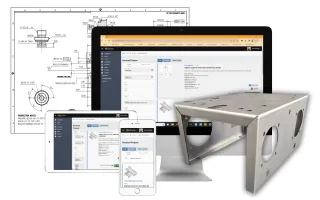
Sourcing Presswork Through Qimtek
How do you choose the right presswork suppliers?
The best supplier is not always the cheapest one on the first quote. Buyer priorities usually include capacity, tooling experience, material knowledge, quality controls, and the ability to support the volumes you actually need. Some presswork suppliers are better suited to simple high-volume parts, while others are stronger on lower-volume engineered work or parts with tighter inspection needs.
When comparing suppliers, look for:
- experience with similar parts or sectors
- the right press size and tooling capability
- confidence with your material and thickness range
- clear answers on tooling ownership and maintenance
- realistic lead times and communication
- evidence of quality systems and traceability where needed
Presswork manufacturers differ widely, so sending the same enquiry to just one or two companies can narrow your options too early. Qimtek helps you reach multiple UK suppliers from one upload, which gives you a broader view of price, delivery, and manufacturing fit before you decide who to progress with.
Want more supplier options? Get quotes now.
Can Qimtek help with both repeat production and outsourced presswork?
Yes. Some buyers come with a long-running part that needs a new supplier because of capacity, price pressure, quality issues, or a location change. Others need outsourced presswork for a new product launch and want to understand what production route is practical before they place an order.
Qimtek works well for both situations because it lets you compare multiple suppliers without having to build a fresh contact list every time. You can use it when:
- an incumbent supplier is no longer suitable
- you need second-source pricing
- you are moving work back to UK supply
- you need better support for ongoing commercial presswork
- you want a clearer view of tooling and unit cost options
This is especially useful where drawings are mature, volumes are known, and there is a clear need to test the market. It is also valuable earlier on, when supplier feedback can help shape tooling decisions before you commit capital.
Need a quicker sourcing route? Get quotes now.
What makes comparing quotes through Qimtek more useful than chasing suppliers one by one?
When you source manually, a lot of time goes into finding relevant suppliers, sending repeat emails, answering the same questions, and trying to compare quotes that arrive in different formats. That slows down decision making and can make it harder to spot who has really understood the requirement.
Qimtek simplifies that process. You upload your drawings and RFQ details once, then receive responses from suppliers that want to quote. That gives you a more efficient way to review:
- differences in tooling approach
- piece price against volume
- lead time promises
- material and finish assumptions
- whether suppliers have experience with similar metal presswork
The value is not only in speed. It is in making better sourcing decisions with more context. Whether you are buying sheet metal presswork for a new programme or reviewing an established part, you can compare multiple UK manufacturing options and deal direct with the suppliers you shortlist.