
Sourcing reliable plasma cutting capacity can be challenging, especially when you’re working to tight deadlines or mixed material requirements. Use the links below to jump straight to answers for the most common questions engineers and buyers ask when placing plasma cutting work through Qimtek.
Finding the right supplier
How do I find suppliers with immediate capacity for plasma cutting up to 50mm?
Finding spare capacity
is often harder than understanding plasma cutting itself. Plasma is ideal for mild steel, stainless steel and aluminium from 3mm up to around 50mm thick, which makes it perfect for fabrication, structural work, machine components and heavy plate profiling.
Instead of ringing around multiple suppliers, you can upload your drawings to Qimtek once. The system automatically matches your project with UK subcontractors who:
- Have CNC or HD plasma cutting in the thickness range you need
- Run suitable bed sizes (3×1.5m, 4×2m, 6×3m, etc.)
- Already have available machine time
- Are actively looking for plasma cutting work
Because our network includes both smaller job shops and full-scale production manufacturing companies, you’re not restricted to one supplier’s workload. Qimtek helps you quickly find capacity for:
- Thin-sheet bracket and panel work
- Heavy plate profiling up to 50mm
- One-offs, small batches and full production orders
And as a buyer, you use the sourcing platform for free.
See How Qimtek Finds Plasma Cutting Capacity in Minutes
How do I find a plasma cutting supplier with the right sheet size and bed capacity?
Plasma cutting tables vary significantly. Some job shops run 3×1.5m tables, while heavy plate processors may run 6×3m or larger.
Instead of spending time calling around, Qimtek automatically filters suppliers by:
- Available bed size
- Gantry capacity
- Plate-handling equipment
- Cutting power and thickness range
You get connected only with suppliers who can handle your part size, saving time and eliminating unsuitable quotes.
See How Qimtek Matches You With Suppliers Who Fit Your Bed Size Requirements
How do I choose the best plasma cutting supplier for thick plate vs thin sheet?
Thin sheet (3 to 12mm) and heavy plate (20 to 50mm) often require very different machine setups. Some plasma suppliers excel at thin sheet with high-definition systems, while others specialise in thick steel plate processing.
Qimtek removes the guesswork by matching your RFQ with suppliers whose:
- Machine power suits your thickness
- Bed size matches your sheet or plate format
- Experience aligns with your part type
You can also request alternative options like laser or waterjet when surface finish or precision is critical.
See How Qimtek Helps You Match With the Right Supplier for Your Thickness Range
How do I find a supplier who can plasma cut stainless steel or aluminium reliably?
Stainless and aluminium require careful heat control, travel speed and gas selection. Some plasma shops specialise in these materials with the correct equipment.
On Qimtek, your RFQ reaches suppliers who:
- Advertise stainless or aluminium capability
- Use HD plasma for superior edge quality
- Offer post-processing such as deburring or brushing
You avoid suppliers who aren’t suited to your material.
Discover How Qimtek Connects You With the Right Material Specialists
How do I locate UK plasma cutting companies near me without doing manual searches?
Manual searches only show a fraction of available suppliers. Qimtek's Drag Drop Source Service automatically connects you with suitable UK subcontractors nationwide — not just local ones.
This includes:
- Local workshops
- Regional specialists
- National plate processors
You reach more capability with far less effort.
See How Qimek Finds Plasma Cutting Suppliers Across the UK Automatically
How do I source plasma cutting for large or heavy components?
Large or heavy pieces require specialist equipment:
- Large plasma beds (up to 6×3m+)
- High-power HD systems
- Overhead cranes / heavy lifting
Qimtek's Drag Drop Source platform filters suppliers by all of these criteria automatically.
Learn How Qimtek Identifies Suppliers for Large or Heavy Plasma Cut Components
How do I source plasma cutting for tubes, box section or angle and is tube laser a better option?
Plasma can cut tube and box section, but accuracy varies due to manual positioning and heat effects. Tube laser cutting is usually the better option for:
- Aligned holes
- Clean slots
- Precision mitres
- Repeatable accuracy
On Qimtek, you simply tag your RFQ as tube or box section, and our Drag Drop Source platform matches you with suppliers offering tube laser or plasma based on your requirements.
See How Qimtek Helps You Choose Between Plasma Cutting and Tube Laser Cutting
Quoting and price comparison
How do I get quotes for plasma cutting services quickly?
When requesting plasma cutting prices directly, you usually repeat the same details to multiple suppliers material grade, thickness, tolerances, finishing requirements, etc.
Qimtek’s Drag Drop Source platform eliminates this repetition. You upload your RFQ once and multiple UK-based suppliers receive all the information they need.
You specify:
- Material: S275/S355, 304/316 stainless, aluminium
- Thickness: 3 to 12mm sheet or 20 to 40mm plate
- Complexity: simple blanks to intricate nestings
- Tolerances and edge requirements
- Quantities & call-off schedules
Qimtek then matches your project with UK suppliers who can handle your exact requirement. They download your drawings, ask relevant questions and quote directly.
You compare all prices, lead times and supplier messages in one dashboard no duplicated emails or phone calls.
Learn How to Get Instant Plasma Cutting Quotes With Qimtek
How do I compare plasma cutting prices quickly?
Plasma cutting costs are influenced by:
- Material thickness and type
- Number of pierces
- Cut length and part complexity
- Kerf width and heat input
- Nesting efficiency
- Required finishing or machining
Rather than chasing individual quotes, Qimtek lets you submit the RFQ once and receive multiple prices automatically. This makes price benchmarking simple and because each supplier sees the full technical pack, the quotes are far more accurate than those obtained by phone.
Find Out How Qimtek Simplifies Plasma Cutting Price Comparison
How do I maintain multiple plasma cutting quotes and supplier responses in one place?
Our Drag Drop Source platform stores:
- Quotes
- Conversations
- Drawings
- Supplier profiles
- Lead times
- Favourites lists
All in one organised interface, ideal for busy procurement teams managing several RFQs.
See How Qimtek Keeps All Your Plasma Cutting Quotes Organised
Platform workflow
How do I source plasma cutting for different materials through one platform?
Plasma can cut a wide range of electrically conductive metals, including:
- Mild steel
- Carbon steel
- Stainless steel
- Aluminium
- Brass & copper
- Weathering steel (Corten)
Different shops specialise in different material combinations.
Qimtek lets you tag each RFQ with your material and thickness, for example:
- 20mm S355 base plates
- 10mm 304 stainless brackets
- 6mm aluminium panels
The system only connects you with suppliers whose capabilities match those materials. Over time, you can add the best performers to your favourites list for easy access on repeat work.
Discover How Qimtek Matches You With the Right Plasma Cutting Specialists
How do I submit my plasma cutting files once and share them with multiple suppliers?
Most suppliers need DXF, DWG, STEP or IGES files, with PDFs for reference.
Instead of emailing files repeatedly, you:
- Upload once
- Add material and thickness
- Post the RFQ
- Qimtek automatically distributes your pack to matched suppliers
Suppliers download securely and quote directly.
See How Qimtek Handles All Your Plasma Cutting Drawings With One Upload
I have questions and want to discuss my plasma cutting project directly with a supplier, how does that work?
Many buyers want to talk through their drawings, tolerances or material requirements before awarding work. Qimtek fully supports this, you deal directly with the suppliers, not through a middleman.
Once you post an RFQ via our Drag Drop Source platform:
- Matched suppliers can message you directly
- You can ask technical questions inside the dashboard
- Suppliers can request clarification or recommend adjustments
- You can send updated drawings or discuss alternative processes
- All communication stays between you and the supplier
Qimtek does not interfere, mark up pricing, or sit between you and the subcontractor. You remain in full control of the conversation and the relationship.
Learn How Qimtek Lets You Speak Directly With Plasma Cutting Suppliers
How do I ensure my plasma cutting drawings stay protected during sourcing?
When sourcing plasma cutting services, protecting your drawings can be time-consuming, especially if you’re sending the same NDA to several plasma cutting suppliers and chasing signatures. Qimtek streamlines this completely.
You can apply an NDA to your RFQ instantly, either by uploading your own or using Qimtek’s one-click electronic NDA. Suppliers must accept it before accessing your CNC plasma cutting drawings, so confidentiality is controlled automatically.
This saves you the hassle of emailing NDAs, correcting mistakes, or tracking who has signed what, everything is handled securely inside your dashboard.
Learn How Qimtek Protects Your Confidential Plasma Cutting Drawings
Quality, tolerances and compliance
How do I balance cut quality, tolerances and speed on plasma-cut parts?
Plasma offers a strong balance of accuracy, speed and cost. Standard plasma is ideal for general fabrication, while HD (high-definition) plasma provides cleaner edges and reduced bevel.
On Qimtek, you can easily compare suppliers offering:
- Standard plasma cutting
- Fine plasma
- HD plasma
- Plasma + secondary machining
This lets you choose whether to prioritise fast turnaround, tight tolerances or lower cost.
See How Qimtek Helps You Balance Cost, Speed & Cut Quality
How do I make sure plasma-cut profiles meet drawing tolerances?
Most modern CNC plasma systems achieve reliable tolerances in the typical working range:
- Standard plasma: ±1.0mm
- Fine plasma: ±0.5mm
- HD plasma: ±0.3–0.5mm
If certain holes or edges require tighter tolerances, secondary machining may be recommended.
Qimtek helps ensure quality by giving you access to:
- Supplier profiles with approvals (ISO 9001, etc.)
- Buyer reviews and experience ratings
- The ability to re-award future work to proven suppliers
This reduces the risk of tolerance or edge issues.
Explore How Qimtek Helps You Identify Quality-Focused Plasma Cutting Suppliers
What approvals or certifications do plasma cutting companies typically hold?
Quality and traceability are important when sourcing plasma cut parts, especially for structural components or parts used in safety-critical assemblies. Many UK plasma cutting suppliers hold:
- ISO 9001 – Quality management
- EN 1090 / CE marking – Required for structural steel and fabricated assemblies
- ISO 14001 – Environmental management
- BS/EN material traceability standards – Particularly for structural and defence sectors
- Welding & fabrication approvals if secondary operations are included
On Qimtek, you can view supplier certifications directly on their profiles. When posting your RFQ, you can also specify which approvals are required, ensuring only suppliers meeting those standards can quote.
See How Qimtek Helps You Find Certified & Approved Plasma Cutting Suppliers
How do I check a plasma cutting supplier’s quality, approvals and past performance?
Qimtek provides visibility into:
- Supplier certifications (ISO 9001, etc.)
- Past buyer reviews
- Response reliability
- Industries served
- Case studies and capabilities
This helps you confidently award work based on experience, not just price.
Explore How Qimtek Helps You Select Quality-Approved Plasma Cutting Suppliers
Prototype to production
How do I get prototypes and small plasma-cut batches without paying premium rates?
Plasma is ideal for prototypes because:
- It doesn’t require expensive tooling
- It’s cheaper than laser on thick plate
- It can process simple and complex profiles quickly
- Many job shops specialise in one-offs and small batches
Qimtek includes numerous small, agile suppliers who respond quickly to prototype work. You can then grow with them into production.
Learn How Qimtek Helps You Source Fast, Affordable Plasma Prototypes
How do I move from prototype plasma cutting to production batches seamlessly?
Once your design is proven, you may need to shift from prototype quantities to batch work or call-off orders.
Through Qimtek, you can:
- Re-award work to the same supplier for continuity
- Or benchmark production prices with new suppliers
- Manage multiple projects through your dashboard
- Store drawings and communication centrally
This makes scaling up significantly easier.
See How Qimtek Supports Both Prototype and Production Plasma Cutting
Process choice and value engineering
How do I choose between plasma cutting, laser cutting and waterjet cutting?
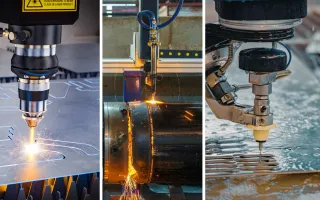
Each cutting method suits different materials, thicknesses and tolerance requirements, which is why many buyers compare processes before awarding work.
Plasma cutting is generally the most cost-effective choice for medium to thick metal plate. It offers fast cutting speeds and good edge quality at a competitive price.
Laser cutting is ideal for thinner metals or parts requiring high precision, clean edges and minimal finishing. It delivers tighter tolerances than plasma, especially on thinner gauge material.
Waterjet cutting uses no heat and is best for materials sensitive to thermal distortion, such as aluminium, stainless steel, composites, rubber and plastics. It delivers an exceptionally clean edge on thick or non-metal materials.
If you're unsure which method is best, you can simply post one RFQ through Qimtek and request plasma, laser and waterjet options. Suppliers will quote based on the most suitable process for your specification.
Use Qimtek to Compare Plasma, Laser & Waterjet Options Instantly
How do I reduce plasma cutting costs through better design and nesting?
Design improvements can significantly reduce costs. Suppliers often recommend:
- Avoiding very small internal features
- Ensuring holes meet minimum size requirements
- Reducing pierces
- Simplifying geometry
- Using standard plate sizes
- Improving nesting efficiency
Through Qimtek's Drag Drop Source platform, suppliers can ask questions and propose improvements at the quoting stage.
Discover How Qimtek Helps Reduce Plasma Cutting Costs Through Better Design
How do I quickly find suppliers who offer plasma cutting AND secondary operations?
Many plasma parts also require bending, countersinking, machining, galvanising, painting or assembly. Qimtek's, Drag Drop Source platform lets you tag all operations in one RFQ.
This means you can:
- Receive quotes from turnkey suppliers
- Avoid juggling subcontractors
- Reduce handling and lead time
Ideal for structural frames, machine parts and fabricated assemblies.
Find Multi-Process Plasma Cutting Suppliers With Qimtek