

Plastics are often chosen for a reason: lower weight, electrical insulation, chemical resistance, noise reduction, or simply a better cost option than metal. But sourcing the right supplier can still take time, especially when you need confidence on tolerances, material grades, and lead times.
Qimtek helps you get there faster. Upload your drawings once and reach UK suppliers who machine plastics every day. You can compare offers, ask practical questions, and move forward with the supplier that fits your spec and timeline.
Understanding Plastic Machining Services
What counts as plastic machining, and when is it a good fit?
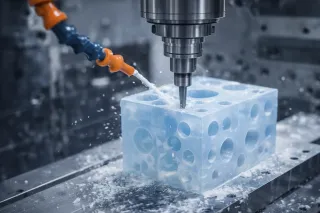
Plastic machining is the production of components by removing material from plastic stock. It is typically used for prototypes, one offs, spares, and small to medium batch quantities, but it can also support repeat orders where tight geometry control is needed. Unlike moulding, machining avoids tooling lead time, so it is often the fastest route when you need parts quickly or the design may change.
Common outputs include machined plastic parts such as:
- Wear strips, guides, and low friction slides
- Insulating bushes and electrical housings
- Sealing components and valve seats (material dependent)
- Medical, lab, and food adjacent fixtures where corrosion resistance matters
- Lightweight brackets and covers
Many buyers ask for plastic cnc machining because it gives repeatability, positional accuracy, and the ability to hold features like pockets, bosses, and complex profiles. If you need a mix of turned and milled features, a capable plastic machining company can often make it from one billet, reducing assembly points.
On Qimtek, you can post an RFQ with your drawings and notes, then compare multiple quotes from UK suppliers who already machine plastics routinely.
Want multiple quotes without chasing? Post your RFQ here.
Which plastics are typically machined, and what should you specify?
Not all plastics behave the same. Some cut cleanly and stay stable, while others move with temperature or absorb moisture. If you can, specify the exact grade rather than just the family name, and call out any compliance needs (food contact, electrical, medical, flame rating).
Typical plastic machining materials include:
- PEEK for high temperature, strength, and chemical resistance
- Acetal (POM) for low friction, good dimensional stability, and crisp machining
- Nylon for toughness and wear, but note moisture uptake can affect size
- PTFE for very low friction and chemical resistance, though it can be harder to hold tightly
- ABS for general purpose housings and fixtures, cost effective and easy to machine
- Polycarbonate for impact resistance and clarity (where optical finish is not critical)
If you are not sure which is best, add the functional requirement in the RFQ. For example: “sliding contact, low friction, dry running”, or “chemical exposure to IPA, needs stability”. A good supplier will come back with options and trade offs.
When you upload to Qimtek, you can include notes on environment, temperature range, and whether the part is cosmetic. That gives plastic machining suppliers enough context to quote the right stock and plan the job sensibly.
Ready to share drawings and get pricing options? Post your RFQ here.
What types of machining are used for plastic parts?
Plastic components are typically produced using the same core CNC processes as metal parts, but with different tooling strategies, speeds, and clamping methods to suit softer, more temperature-sensitive materials. The main types of machining used for plastic parts are:
CNC milling: Used to create prismatic parts, pockets, slots, profiles, and complex 3-axis or multi-axis geometries. Ideal for housings, brackets, covers, and machined plates.
CNC turning: Best for cylindrical or rotational components such as bushes, rollers, spacers, threaded parts, and precision sleeves.
Multi-axis machining (4- and 5-axis): Allows complex shapes, undercuts, and multi-face features to be produced in fewer set-ups. Useful where alignment and positional accuracy are critical.
Drilling and tapping: For threaded holes and clearance features. Plastics may require adjusted thread depths or inserts depending on load and repeat use.
Thread milling or insert fitting: Common where durability matters. Metal threaded inserts are often used in plastics to improve strength and wear resistance.
If you’re unsure which process is most suitable, suppliers quoting through Qimtek can advise based on geometry, tolerance, and material. Clear drawings help them assess whether your part is better suited to milling, turning, or a combination of both.
Need quotes for your plastic parts? Post your RFQ here.
Is 3D printing a viable alternative to CNC machining for plastic parts?
In some cases, yes. But it depends on what the part needs to do. 3D printing (additive manufacturing) can be a good option for early-stage prototypes, complex internal geometries, or very low volumes where tooling cost needs to be minimal. It allows fast iteration without committing to full production processes.
However, CNC machining is often preferred when you need:
- Tighter tolerances and better dimensional stability
- Stronger mechanical properties from solid engineering-grade plastics
- Smoother surface finishes without secondary processing
- Production consistency across repeat batches
- A wider choice of high-performance materials such as PEEK, Acetal (POM), Nylon, or PTFE
Machined plastic parts are cut from solid stock, which means material properties are uniform and predictable. 3D printed parts, depending on the process, can show layer lines, anisotropic strength, or reduced heat resistance.
If you are unsure which route is right, you can outline your performance requirements in your RFQ. Suppliers quoting through Qimtek can advise whether CNC machining or additive manufacturing makes more technical and commercial sense for your application.
Compare CNC machining and 3D printing costs? Post your RFQ here.

Costs, Lead Times, and Precision
What drives plastic machining cost and pricing?
Plastic machining cost is not just about cycle time. Material choice, stock size, and how the part must be held can matter more than you might expect. A simple looking part in an expensive polymer can cost more than a complex part in a cheaper grade.
Typical cost drivers include:
- Material type and grade (PEEK and high performance polymers carry a premium)
- Stock dimensions and waste, especially if you need thick billet
- Part geometry, thin walls, deep pockets, and long slender features
- Tooling approach, such as sharp cutters, special drills, or reduced feeds to manage heat
- Secondary ops like inserts, deburring, polishing, marking, or cleaning
- Inspection and documentation requirements
Plastic machining price also changes with quantity. If you need 1 to 5 parts, you are paying for set up and careful proving out. If you need 50 or 500, a supplier may create a repeatable fixture and reduce unit cost significantly.
Through Qimtek you can request more than one quote and compare how suppliers have interpreted the job. If one price is far lower, it is worth checking material grade, inspection assumptions, and whether the supplier has allowed for the finish you need.
Want to compare pricing side by side? Post your RFQ here.
What are typical plastic machining lead times in the UK?
Lead time depends on material availability and how quickly the supplier can schedule the work. Many plastics are readily available in the UK, but certain grades, colours, or certified stock can add time. If you require traceability, the supplier may need to order specific batch documented material.
Plastic machining lead times are typically influenced by:
- Whether the supplier already holds the required stock size and grade
- Batch quantity and set up complexity
- Need for inserts, bonding, or additional finishing steps
- Inspection and reporting, especially on tight fits
- Packaging requirements to prevent scratching or contamination
If delivery date matters, state it clearly in the RFQ. Many suppliers can offer an expedited option for a premium, or they can split delivery so you receive first offs quickly while the rest follow.
Qimtek helps because you are not waiting on one company’s capacity. You can reach several UK suppliers at once and choose the best mix of lead time and confidence.
Need parts by a set date? Post your RFQ here.
How precise can plastic machining be, and what tolerances are realistic?
Precision plastic machining is achievable, but the material behaviour must be considered. Plastics expand more with temperature than metals, and some materials relax after machining. This means the best approach is to specify functional tolerances only where you need them, and allow sensible freedom elsewhere.
Plastic machining tolerances depend on:
- Material stability (acetal is generally more stable than nylon in changing humidity)
- Wall thickness and feature depth
- Clamping method and fixture design
- Heat management during cutting
- Post machining conditioning time if stability is critical
For bores, press fits, and sliding fits, include the mating part details and the required fit type. A supplier can then plan the finishing pass, choose the right tooling, and advise whether an insert or bushing is a better solution than cutting a thread directly into a softer polymer.
If you are unsure, ask in the RFQ for the supplier’s recommended approach. Many plastic machining services will suggest design tweaks like adding radii, increasing local wall thickness, or changing a pocket depth to reduce distortion.
Want a quote that includes tolerance feedback? Post your RFQ here.
How do I pick the right plastic machining company or plastic machining suppliers?
Start with capability and communication, not just the lowest number. A good plastic machining company will ask sensible questions, confirm material grade, discuss any risk points, and be clear on inspection and packaging. That’s often the difference between a smooth delivery and a last-minute surprise.
When comparing plastic machining suppliers, look for:
- Experience with your chosen material and part type
- Evidence they understand your functional tolerances and fits
- Clear lead time commitments and delivery approach
- Appropriate inspection methods for the features that matter
- Helpful feedback on manufacturability where relevant
Qimtek supports this selection process by letting you compare multiple quotes side by side, then deal direct with the supplier you choose. You stay in control of questions, revisions, and order placement, while keeping the sourcing process efficient.
Want to reach verified suppliers fast? Post your RFQ here.
Sourcing Plastic Machining Through Qimtek
How do you get a plastic machining quote through Qimtek?
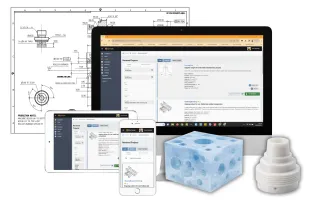
The simplest way is to upload your drawing pack and specify what matters. Qimtek’s Drag Drop Source is built around practical procurement. You post your RFQ once, then interested suppliers respond with pricing, lead time, and any technical questions.
To get a useful plastic machining quote, include:
- Drawings or 3D model, plus revision level
- Material and grade, including any certification needs
- Quantity and whether repeat orders are expected
- Critical tolerances, fits, and finish expectations
- Delivery location in the UK and any packaging constraints
You can then compare quotes based on what is included, not just the headline number. If a supplier proposes an alternative material or a tweak to improve stability, you will see that in the response and can decide quickly.
Want quotes from the right suppliers fast? Post your RFQ here.
What should you ask a supplier before placing an order for custom plastic parts?
Plastics can succeed or fail on details that never appear on a drawing. A short pre order check can save a lot of pain, especially if the part will be used in a warm environment, exposed to chemicals, or needs a smooth sliding surface.
Good questions to ask include:
- Will you machine from billet, plate, or rod, and is the stock stress relieved?
- How will you manage heat and prevent surface melting or smearing?
- Do you recommend inserts for threads or repeated assembly?
- Can you provide first off inspection or a simple measurement report?
- How will parts be packaged to avoid scratches, dust, or deformation in transit?
If you are ordering cnc plastic machining for an assembly, confirm how the supplier will control the interface dimensions and whether they advise any change to tolerance bands for a better functional fit.
Using Qimtek, you can capture these questions in the RFQ so multiple suppliers answer them up front. That makes selection simpler and reduces surprises once the job starts.
Want to brief suppliers properly first time? Post your RFQ here.
What should I include to get an accurate plastic machining quote?
The more complete your RFQ, the better the quote quality. Even a quick note about what really matters can reduce assumptions and keep pricing comparable.
A strong RFQ usually includes:
- 2D drawing and/or 3D CAD file (and revision status)
- Material and grade (or a note if you want supplier recommendations)
- Quantity, including any prototype and production split
- Key tolerances and any critical fits, threads, or sealing faces
- Surface finish expectations and cosmetic face notes
- Delivery postcode and required date
If you are unsure about anything, say so. Many suppliers will help you tighten the spec, especially when the goal is a reliable plastic machining service for ongoing supply, not just a one-off.
Want faster, cleaner quotes? Post your RFQ here.
Ready to move forward? Upload your drawings to Qimtek’s Drag Drop Source and get multiple quotes from UK suppliers for plastic machining services, then choose the best fit and deal direct.