

Finding the right welding supplier is rarely just about getting a quick price. You also need to know the process fits the job, the supplier can work to your drawing, and the delivery date is realistic. Whether you are buying one-off brackets, prototype assemblies, frames, enclosures or repeat production weldments, clear sourcing can save time and reduce risk. Qimtek helps you send one RFQ to suitable UK suppliers so you can compare responses, ask questions and move faster with more confidence.
Understanding Welding Services
What are the different types of welding and when are they used?
Different welding processes suit different materials, part designs and production volumes. The most common options you’ll see from UK suppliers include:
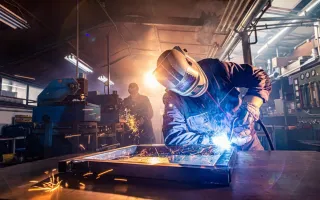
MIG welding (Metal Inert Gas)
A fast and versatile process that uses a continuously fed wire. Ideal for mild steel and thicker materials where speed and cost matter. Often used for frames, brackets and general fabrication.
TIG welding (Tungsten Inert Gas)
A slower, more controlled process that produces a clean, precise finish. Best for thinner materials, stainless steel and aluminium where appearance and accuracy are important.
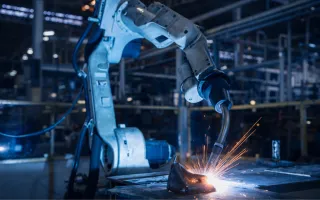
Robotic welding
Automated welding using programmed robots. This is typically used for high-volume production where repeatability, consistency and speed are critical. Common in automotive and large batch manufacturing.
Spot welding
Used mainly for sheet metal. It joins overlapping parts quickly using electrical resistance, making it suitable for enclosures, panels and light assemblies.
Stud welding
Fixes threaded studs or fasteners to a surface without drilling through the material. Useful for enclosures, panels and assemblies that need mounting points.
In practice, the right choice depends on your material, thickness, required finish and production volume. Many suppliers offer multiple processes, so you can match the method to the job rather than forcing a one-size-fits-all approach.
Which welding process is right for the parts I need made?
The best welding service depends on the material, thickness, appearance requirements and how the part will be used. For many fabrication jobs, MIG welding services are a strong option where speed and efficiency matter. TIG welding services are often chosen for cleaner visual finish, thinner material and jobs where tighter control is needed. Spot welding services are common for sheet metal assemblies where overlapping parts need fast repeat joining. Stud welding services suit applications where threaded studs need fixing to a component without drilling through it.
If your RFQ is clear about function, material and finish, suppliers can quote the most suitable route instead of guessing. That matters because the wrong process can push up welding cost, lead time or rework. When you upload drawings through Qimtek, suppliers can review the job in context and quote against the process they are set up to handle.
Need quotes without chasing suppliers? Get quotes now.
What materials can UK welding suppliers usually work with?
Most industrial welding services will quote for mild steel, stainless steel and aluminium, but the details still matter. Material grade, thickness, joint design and finish requirements all affect how suitable a supplier is. A workshop that is excellent on mild steel fabrications may not be the best fit for cosmetic stainless work or thin aluminium assemblies.
It helps to include:
- Material grade and thickness
- Finished assembly drawing and part drawings
- Any weld symbols or process notes
- Surface finish requirements
- Inspection or certification needs
Good welding suppliers will review whether the material choice and weld detail are practical for manufacture. On Qimtek, that gives you a better chance of receiving useful questions early, before the job reaches the shop floor.
Want faster quote comparisons? Get quotes now.
Can I source both simple welded parts and larger fabricated assemblies?
Yes, but not every supplier is geared for the same type of work. Some welding companies focus on straightforward brackets, frames and repeat batch components. Others are better suited to larger fabrications, multi-part assemblies or projects that need fabrication welding services alongside cutting, folding, machining or finishing.
This is where buyer time often gets lost. You can spend days contacting firms that do welding, only to find they are not interested in the batch size, the assembly size or the material. Qimtek helps filter that effort by putting your RFQ in front of suppliers already looking for relevant work. That makes it easier to compare welding quotes from businesses that are a closer fit technically and commercially.
Looking for matched suppliers? Get quotes now.
Costs, Lead Times, and Precision
What affects welding cost and welding price most?
Welding price is driven by more than arc time. Buyers usually get better quote quality when they give suppliers enough detail to cost the full job properly. A simple frame in mild steel can price very differently from a stainless assembly that needs neat cosmetic welds, inspection and packed delivery.
Main cost drivers usually include:
- Material type and thickness
- Joint length and weld volume
- Part count and batch size
- Fixturing or jig requirements
- Distortion control and rework risk
- Grinding, dressing or cosmetic finishing
- Inspection, certification and packing
If you only request a rough welding service price without drawings or quantities, suppliers have to protect themselves with assumptions. That can mean slower replies or less competitive quotes. Qimtek helps you share the right information once, so suppliers can return more informed costs instead of vague estimates.
Want clearer welding prices? Get quotes now.
How can I improve welding lead times when the job is urgent?
Welding lead times depend on supplier capacity, material availability, fixture needs and how complete the RFQ is. Jobs slow down when drawings are unclear, assembly sequence is not shown, or important requirements only come out after quoting has started.
To help suppliers quote realistic delivery, include:
- Required delivery date and postcode
- Prototype, batch or repeat production volume
- Drawing revisions and assembly references
- Whether materials are free issue or supplier sourced
- Any finish, coating or secondary operations
For urgent work, it is useful to state what is flexible. A supplier may be able to improve lead time by splitting the batch, changing the delivery schedule or quoting part-complete supply first. Qimtek makes those conversations easier because you can compare both price and timing across multiple responses without repeating the brief.
Need quicker delivery options? Get quotes now.
How precise can welded parts be, and what should I put on the drawing?
Welding introduces heat, so tolerances on a welded assembly are not judged in quite the same way as a machined component. Precision depends on material thickness, weld size, sequence, fixturing and whether machining takes place after welding. If a dimension is critical, it helps to show exactly which features matter most and where a supplier should focus control.
Useful drawing notes can include:
- Critical dimensions and datum references
- Permitted distortion or flatness limits
- Weld symbols and any preferred process
- Areas that must remain cosmetic
- Machined after weld requirements
That level of detail helps welding suppliers assess risk before they quote. It also makes it easier to tell whether MIG welding, TIG welding or another route is the better fit. Through Qimtek, you can source welding services with practical drawing packs that support better supplier questions and fewer surprises later.
Need suppliers who can review tolerances? Get quotes now.
Sourcing Welding Through Qimtek
How do I get useful welding quotes instead of rough estimates?
The strongest RFQs give suppliers enough detail to quote the work as it will actually be made. That means more than just attaching a PDF and asking for a price. Clear technical packs lead to better questions, more accurate costing and fewer changes once the order is placed.
A good RFQ for welding services usually includes:
- Part and assembly drawings
- Material grades and thicknesses
- Quantities and annual usage if known
- Finish, coating or paint requirements
- Inspection, traceability or quality documents needed
- Target delivery date and delivery location
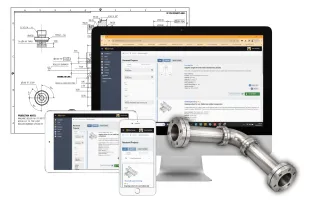
Qimtek gives you one place to upload that information and invite multiple UK suppliers to respond. That keeps communication cleaner and helps you compare each welding quote against the same brief.
Want more accurate quotes first time? Get quotes now.
How does Qimtek help me compare the right welding suppliers?
When you source manually, the hard part is often not finding companies that can weld. It is finding ones that want your type of work, have suitable capacity and can quote against your exact requirement. Qimtek helps by letting you send one enquiry and receive responses from relevant UK suppliers, so you can compare capability, delivery and welding price in one process.
This is useful for buyers who need to source:
- Prototype welded parts
- Small and medium batch production
- Repeat fabrication work
- Assemblies that need secondary operations
You stay in direct contact with suppliers, which makes it easier to ask technical questions, review revisions and build ongoing relationships where the fit is right.
Want to compare suppliers direct? Get quotes now.
Can I source prototype welding and repeat production through the same route?
Often yes. Many buyers need a small first batch to prove the design, then a smoother route into regular supply once the assembly is signed off. The best outcome is when the original RFQ already gives suppliers enough context to understand whether the job could develop into repeat work.
That means sharing expected batch pattern, likely revisions, and whether jigs or fixtures may be worthwhile later. A supplier may quote prototypes differently from production because setup time is spread across fewer units at the start. With Qimtek, you can compare those approaches across suppliers and decide who is best for the stage you are at now, while keeping future supply options open.