

Gears are small parts with big consequences. If the tooth form is off, noise goes up, wear speeds up, and assemblies start to fail early. When you are buying gears, splines, or keyways, you usually need two things at once: the right process and a supplier who understands inspection.
This page helps you get your bearings. You will see the common gear machining routes, what to share in an RFQ, and what drives cost and lead times. When you are ready, you can use Qimtek to reach capable UK suppliers and compare quotes in one place.
Understanding Gear Cutting Services
What counts as gear cutting, and when is it the right approach?
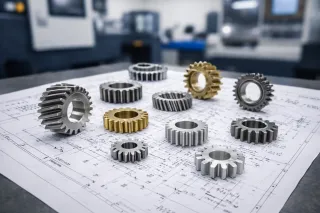
Gear cutting is a family of processes used to produce gear teeth, splines, and related profiles on shafts, hubs, and blanks. It is typically chosen when you need repeatable tooth geometry, controlled runout, and a finish that supports smooth meshing. Depending on the spec, suppliers may use cnc gear cutting methods alongside traditional generating processes.
Common parts that fall under gear cutting services include spur gears, helical gears, internal gears, timing components, splined shafts, and hubs with keyways. In many RFQs, “gear cutting” is shorthand for a complete route: blank preparation, tooth generation, heat treatment (if needed), and final finishing or inspection.
- Use it when you need defined tooth form and backlash control
- Specify whether the gear is external or internal, and any mating part details
- Call out application needs like noise, load, and duty cycle if you can
On Qimtek, you can upload drawings and include the functional requirements so the right suppliers self-select. That helps you avoid quotes from shops that do not have the right tooling, cutters, or inspection capability.
Want multiple quotes without chasing? Post your RFQ here.
Which processes are most common: hobbing, shaping, spline, and keyway cutting?
Most gears are made using generating processes because they are efficient and consistent. Gear hobbing services are widely used for external gears and splines, especially where volumes or repeatability matter. Gear shaping services are often used for internal gears, shoulder-close features, or where hobbing access is limited.
Spline cutting services may be done via hobbing, shaping, broaching, or milling depending on the spline form and quantities. Keyway cutting services are commonly produced by slotting, broaching, wire EDM, or milling, depending on width, depth, and whether the keyway is internal or external.
- Hobbing: fast for external gears and many spline types
- Shaping: useful for internal gears and features near shoulders
- Broaching: efficient for repeat internal keyways and some internal splines
- Milling/slotting: flexible for low volume or awkward geometries
When you request gear cutting quotes through Qimtek, add notes like “internal gear” or “spline form per drawing” so suppliers can propose the best route rather than forcing a one-size-fits-all method.
Need a quick comparison of routes and prices? Upload your RFQ here.
Which materials are common for gear cutting, and how do they affect cost?
Gear cutting materials vary widely, but most UK work centres around steels and stainless, with brass and aluminium used for specific applications. Material choice affects tool wear, cycle time, heat treatment needs, and how easy it is to hit the finished tolerances.
Typical gear cutting materials include steel, stainless, brass, aluminium, plus harder alloys where strength or corrosion resistance is critical. If hardness is involved, make it clear whether the part is supplied as:
- soft-machined then heat treated
- machined after heat treatment (hard machining)
- case hardened with finishing operations required
From a purchasing point of view, unclear material condition is a common reason quotes vary. When you post on Qimtek, include the material spec and any hardness targets, so gear cutting suppliers can price tooling, inspection, and lead time correctly.
Want accurate pricing by material and hardness? Post your RFQ here.
What information should an RFQ include to get accurate quotes?
Gear RFQs go smoother when the supplier can see the whole picture: geometry, material, heat treatment, and how the gear will be checked. A drawing is essential, but the notes around it often decide whether the quote is usable.
- Tooth data: module/DP, number of teeth, pressure angle, helix angle, face width
- Gear type: spur, helical, internal, rack, spline, or special profile
- Quality requirements: tolerances, runout limits, surface finish, and inspection method
- Material and condition: steel, stainless, brass, aluminium, plus any hardness target
- Heat treatment/coating: case harden, nitride, induction harden, plating, etc.
- Quantities: prototype, batch, and any forecasted repeat volumes
- Associated features: bores, keyways, threads, or matching shafts
If you are unsure how to describe the requirement, Qimtek lets you add a short functional note. That context helps gear cutting suppliers quote the right process and avoid assumptions that drive rework or delays.
Want suppliers to quote from the right info first time? Post your drawings here.
Costs, Lead Times, and Precision
What drives gear cutting cost and gear cutting price?
Gear cutting cost is mainly a mix of setup time, tooling, machine time, and inspection. The more specialised the tooth form or the tighter the tolerance, the more time goes into proving the process and verifying results. Material choice also matters, especially when you move into tougher steels or add heat treatment.
- Setup and tooling: cutters, hobs, fixtures, and proving runs
- Part complexity: tooth form plus bores, shoulders, keyways, and cross holes
- Material: steel and stainless typically take longer than aluminium or brass
- Heat treatment: adds process steps and can require post-grind finishing
- Inspection: tighter requirements mean more measurement and reporting
- Quantity: prototypes carry more setup cost per part than production batches
If you need a fast sense-check, comparing multiple quotes through Qimtek can reveal whether price differences are coming from process choice, assumed tolerances, or included inspection. That is often more useful than chasing a single supplier for revisions.
Want a clearer view of cost drivers? Upload an RFQ for quotes.
Typical gear cutting lead times in the UK, and how to reduce them
Gear cutting lead times vary more than people expect because the route depends on tooling availability, machine capacity, and whether heat treatment is involved. A simple external spur gear in a common material may be turned around quickly, while an internal gear with heat treatment and finishing will take longer.
To reduce lead times, make it easy for suppliers to quote cleanly and start work without waiting for clarification.
- Send a complete drawing pack and confirm revision status
- State whether equivalent materials are acceptable
- Clarify whether prototypes must match production route
- Separate “must-have” tolerances from “nice-to-have” expectations
- Confirm delivery requirements, including postcode and packaging needs
Qimtek helps here because suppliers can respond based on their current capacity. If you need something fast, you can say so in the RFQ notes and compare who can meet the delivery date without guesswork.
Need a quicker turnaround? Post your RFQ and compare lead times.
How precise can you be: gear cutting tolerances and what to specify?
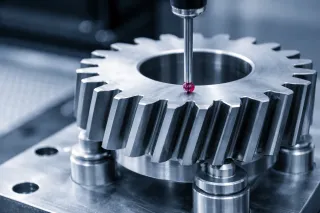
Precision gear cutting depends on the process, the stability of the part, and how quality is defined. Some RFQs only call out tooth data, while others specify runout, tooth-to-tooth variation, surface finish, and inspection reporting. The important thing is to state what matters for function, so suppliers can quote the right route and include the right checks.
If you have a standard you work to, include it in the drawing notes. If not, include practical requirements like allowable backlash range, noise expectations, or fit to a mating gear. Also consider whether the gear will be heat treated, as distortion may require a finishing step such as grinding or honing to hit final tolerances.
- Define datum strategy: how the gear is located and measured
- Call out runout and concentricity where relevant
- State surface finish needs on bores and tooth flanks if critical
- Request inspection reports if the assembly is sensitive
When you post through Qimtek, you can add a short note on what “good” looks like in your application. That helps suppliers choose the right approach and avoids over-specifying, which can inflate cost without improving performance.
Want quotes aligned to your tolerance needs? Upload your drawings here.
Sourcing Gear Cutting Through Qimtek
How do you find the right gear cutting suppliers for your part?
Gears are not a commodity part. Two suppliers can both say “yes” and still deliver very different results depending on tooling, inspection, and experience with your type of gear. The quickest way to reduce risk is to shortlist suppliers based on capability, not just price.
- Process capability: hobbing, shaping, spline cutting, keyway cutting, and finishing options
- Inspection: gear measurement, runout checks, and reporting where required
- Material experience: steel, stainless, brass, aluminium, and any heat treat routes
- Batch approach: one-offs, prototypes, and repeat production control
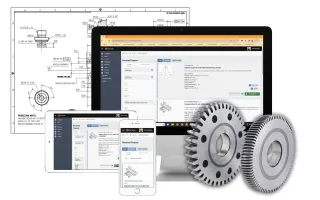
Qimtek is built for practical sourcing. You upload the drawing once, add notes, and reach multiple UK suppliers who can respond with quotes based on real capability and availability. If you are looking for gear cnc machining UK coverage, this approach saves time compared to ringing around and trying to qualify shops one by one.
Want to reach capable suppliers quickly? Post your RFQ here.
What should you check before placing an order?
Before you place an order, make sure the quote matches your real requirement. With gear work, the details that get missed are often around inspection and post-processing, not the basic tooth form.
- Confirm what is included: cutting only, or blanks, heat treat, finishing, and inspection
- Check assumptions: material condition, hardness, and any allowed alternatives
- Agree inspection and documentation: reports, certificates, and sampling rate
- Clarify packaging: tooth protection, rust prevention, and labelled batches
- Lock in delivery: lead time, dispatch method, and postcode delivery details
Using Qimtek, you can compare how different suppliers interpret the spec. If one quote is much cheaper, it is often because something is excluded. It is better to spot that at RFQ stage than after the parts arrive.
Want clean, comparable quotes? Upload your RFQ here.
Can you source specialist regional suppliers, including gear cutting West Midlands?
Sometimes location matters, especially for urgent jobs, iterative prototype builds, or where you want easy collection and drop-off. If your RFQ needs a supplier in a specific area, you can state that in your request. Many buyers look for regional options such as gear cutting West Midlands to simplify logistics and speed up communication.
Even when you prefer local manufacturing, it can still be useful to compare a wider set of responses. A supplier a little further away may have the exact process and inspection capability you need, which can reduce total lead time and risk.
With Qimtek, you can include regional preferences, delivery requirements, and any constraints around collection or scheduled transport. You still deal direct with the supplier once you choose the best fit.
Want quotes from the right regions and capabilities? Post your RFQ here.
Ready to move forward? Upload your drawings to Qimtek Drag Drop Source and get multiple quotes from gear cutting suppliers, all while dealing direct with the manufacturer you choose.