

Multi-axis machining is where good design meets real-world manufacturability. If you need complex geometry, tight positional control, or fewer set-ups, the right supplier can save you days of lead time and a lot of risk. This page covers what to share in your RFQ, what affects price, and how to compare quotes with confidence.
Whether you need a one-off prototype, a batch of repeat parts, or a supplier you can rely on for ongoing work, multi-axis capability can unlock simpler assemblies and cleaner finishes. The key is matching your job to a shop that has the right machine, tooling, and inspection in place.

Understanding Multi-Axis CNC Machining Services
What do multi-axis CNC machining services cover, and when should you use them?
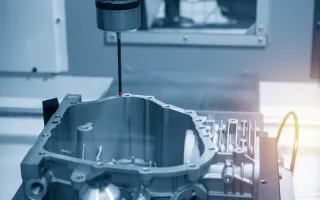
Multi-axis cnc machining services usually mean 4-axis or 5 axis cnc machining, where the machine can tilt and rotate the tool or the part to reach features from more angles. This is useful when you need complex geometry, compound angles, undercuts, or multiple faces machined in one hit. It can also help reduce set-ups, which often improves consistency and reduces the risk of errors between operations.
Typical reasons buyers choose precision multi-axis machining include:
- Complex cnc machining parts with angled holes, pockets, or blended surfaces
- Better positional accuracy by reducing the number of re-clamps
- Faster cycle times for certain shapes, even if programming is more involved
- Improved surface finish on contoured areas
- More predictable results on repeat batches
On Qimtek, you can describe the outcome you need, attach drawings, and let suppliers respond with the right approach. That avoids guessing whether 3-axis plus fixtures is enough, or whether 5 axis cnc machining services are the better route.
Want multiple quotes without chasing? Post your RFQ here.
[image:suggested-placement="After the first H3 answer, before the next H3" alt-text-guidance="Alt text should describe the image and include words: multi-axis, 5 axis, machining" notes="A 5-axis machining centre in operation, showing a trunnion/table tilt or rotary axis with the part being cut."]
Which materials suit precision multi-axis machining, and what should I watch for?
Precision multi-axis machining is used across a wide spread of materials, but each behaves differently under the cutter. Common multi-axis cnc machining materials include aluminium, stainless, titanium, and plastics, and each needs slightly different thinking:
- Aluminium: great for speed and finish. Watch thin-wall distortion and consider how you’ll clamp without marking.
- Stainless: tougher on tooling and can work-harden. Expect slower feeds and more tool wear in the multi-axis cnc machining cost.
- Titanium: high strength-to-weight but heat is the enemy. Tooling strategy and coolant approach matter, and lead times can be longer.
- Plastics: can move with temperature and clamping pressure. Surface finish expectations need to match the polymer choice.
For repeat work, it’s worth agreeing a material spec and inspection approach early, especially if your parts require traceability. Many suppliers can also advise on design tweaks that reduce cycle time without changing function, such as radiusing internal corners or adjusting wall thickness.
On Qimtek, you can specify material grade and any certification needs up front so the right suppliers respond, not just the ones who can machine the shape but can’t source the correct stock reliably.
'Want suppliers who can machine and certify correctly? Post your RFQ here.'
Is 5 axis CNC machining always the right choice for complex parts?
Not always. Some parts look “5-axis” at first glance but can be produced efficiently on 3-axis with good fixtures, or by splitting the component into simpler operations. Other parts genuinely benefit from 5 axis cnc machining because the tool needs to approach from different angles, or because the geometry would be risky to re-clamp multiple times.
A practical way to think about it is this: if a part needs multiple critical faces held in tight relation to each other, fewer set-ups can reduce variation. That is where 5 axis milled parts often shine. But if the features are mostly on two faces, or tolerances are generous, the extra programming and set-up time might not be worth it.
With Qimtek, you can ask suppliers to propose the process. When you compare multi-axis cnc machining quotes, you can also compare the method and assumptions behind the price, not just the number at the bottom.
Need 5 axis machining quotes from UK shops? Upload your drawings here.
Multi-Axis Machining Costs, Lead Times, and Precision
What drives multi-axis CNC machining price, and how can I compare quotes fairly?
Multi-axis work often looks expensive at first glance, but it can reduce overall cost by cutting set-ups, fixtures, and manual finishing. When comparing multi-axis cnc machining price, the biggest drivers are usually:
- Cycle time, including tool changes and any probing routines.
- Set-up time and fixturing complexity.
- Tooling risk, especially for deep pockets, thin walls, and long-reach cutters.
- Material cost and availability (titanium and certified stock can swing quickly).
- Inspection effort, especially if you need CMM reports or measured feature sets.
To compare quotes, look beyond the headline number. Check what’s included: finishing, deburr, inspection reports, packaging, and delivery to your postcode. If one quote is much lower, it may be based on looser assumptions, fewer checks, or a different machining strategy.
Qimtek helps you line up like-for-like offers because suppliers are quoting from the same drawing pack and quantities. You can also ask for clarification on set-ups or inspection so you’re not guessing what the price actually covers.
'Want like-for-like pricing from multiple suppliers? Post your RFQ here.'
[image:suggested-placement="Midway through the costs section, after the first H3" alt-text-guidance="Alt text should describe the image and include words: multi-axis, tolerances, inspection" notes="A machinist inspecting a 5-axis milled part using a CMM or probing setup, with the part on a fixture or inspection plate."]
What lead times should I expect for 5 axis machining quotes and delivery?
Multi-axis cnc machining lead times depend on capacity, material supply, and how complex the set-up is. As a rough guide in UK supply chains:
- Quoting can be quick when you provide both 2D and 3D files, plus material and quantity.
- Prototype parts may be turned around faster if the supplier has stock on the shelf and no special fixtures are needed.
- Repeat batches can be quicker once a proven fixture and program exist, especially for 5 axis milled parts.
Lead time also shifts with finishing. Anodising, passivation, heat treatment, and specialist coatings can add days. If delivery date is critical, say so in the RFQ and ask suppliers to split the response into manufacturing time and finishing time, so you can see where the real constraint is.
On Qimtek, you can post one RFQ and get multiple responses, which helps if one supplier is busy. You’re not locked into a single queue, and you can choose a quote that balances cost and delivery.
'Need a quick lead time from a UK shop? Post your RFQ here.'
What tolerances are realistic for multi-axis machining, and where do problems happen?
Multi-axis cnc machining tolerances can be excellent, but “realistic” depends on part size, geometry, material, and how the part is held. Tight tolerances are easiest to achieve when:
- You define clear datums and keep critical features related to the same set-up where possible.
- Wall thickness supports stability during machining and inspection.
- Temperature control is considered for long cycles or very tight fits.
Common trouble spots include thin webs that move during cutting, deep bores that need long-reach tooling, and features spread across multiple faces that require re-clamping. Even on a 5-axis machine, a poor fixturing plan can introduce error. This is why suppliers may propose a two-stage approach: roughing, stress relief (where needed), then finishing.
If your tolerances are critical, ask for an inspection plan. Some suppliers will include probing in the cycle, plus a CMM report for key dimensions. On Qimtek, you can request this up front so you’re comparing suppliers on capability, not just price.
'Want confident tolerances, not hopeful ones? Post your RFQ here.'
How do you control quality on 5 axis milled parts, especially on complex surfaces?
Complex parts are not only hard to machine, they can be hard to measure. Freeform surfaces, blended radii, and compound angles often need a defined inspection approach, otherwise you risk disputes later. For 5 axis milled parts, many suppliers use a mix of in-process checks, probing, and CMM inspection depending on what the drawing asks for.
If quality is critical, it helps to state what you need up front:
- First article inspection or sample approval
- CMM reports or dimensional certificates
- Surface finish targets on key faces
- Traceability requirements (material certs, batch numbers)
- Any industry standards that apply to your sector
When you request multi-axis cnc machining service quotes through Qimtek, you can include inspection expectations as part of the RFQ. That way the quote reflects reality, and the supplier you choose is aligned from day one.
Want quotes that include inspection and certification? Post your RFQ here.
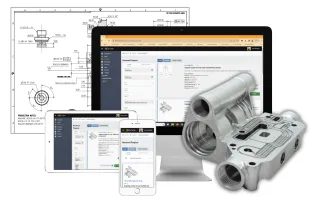
Sourcing Multi-Axis and Advanced CNC Machining Through Qimtek
How does Qimtek help me find the right multi-axis CNC machining suppliers?
The challenge with advanced machining is not just finding any machine shop, it’s finding one that can hit your spec repeatedly. Qimtek helps you reach multi-axis cnc machining suppliers who match your requirements, such as:
- 5 axis capability for complex access and fewer set-ups.
- Experience with your material, whether that’s aluminium, stainless, titanium, or plastics.
- Inspection capability for critical datums and positional controls.
- Finishing routes and packaging suitable for your parts.
You post one RFQ with drawings and requirements, then compare responses. You can filter your decision using practical questions: How will they fixture it? What is included in the inspection? What’s the realistic delivery date to your postcode?
Because you deal direct, you can also build a relationship with the supplier you choose, while still benefiting from competitive quoting when you need it.
'Want to reach capable UK suppliers fast? Post your RFQ here.'
Are Qimtek multi-axis CNC machining suppliers quality approved?
Multi-axis and advanced CNC machining projects often require formal quality systems, especially in aerospace, defence, medical, and high-spec industrial sectors.
Over 70% of suppliers on Qimtek hold recognised ISO9001 quality approvals. Around 20% of suppliers are AS9100 certified, supporting aerospace and aviation-related machining requirements.
When posting your RFQ for complex CNC machining parts, you can specify any required approvals. This ensures that responses come from suppliers who meet your compliance and traceability standards.
'Would you like multiple quotes from an ISO9001 approved machining supplier'
What information should I include in an RFQ for complex CNC machining parts?
Advanced parts are quotable quickly if suppliers can see the full picture. A strong RFQ for complex cnc machining parts usually includes:
- 2D drawing with datum scheme, critical features, and any geometric tolerances.
- 3D model (STEP preferred) for toolpath and collision checks.
- Material and grade, plus any cert requirements.
- Quantity, batch sizes, and whether this is prototype or repeat work.
- Surface finish and cosmetic requirements (for example bead blast, anodise, passivation).
- Threads, inserts, and whether you need multi-axis cnc machining and tapping in one set-up.
If you have tricky areas like thin walls, deep pockets, or angled holes, call them out. Suppliers can then choose sensible strategies such as 3+2 indexing, longer reach tooling, or continuous 5 axis to keep chatter down and protect surface quality.
With Qimtek, you can upload everything once and invite relevant suppliers to quote. You get comparable responses, and you can ask follow-up questions in one place without sending the same email chain to five shops.