

If you need consistent, repeatable turned parts at small diameters, sliding head turning is often the quickest route to stable quality and predictable delivery. It suits prototypes and production runs, especially when features are tight and material waste matters. This page explains what to ask for, what affects cost, and how to get competitive quotes from UK suppliers without spending days chasing.
On Qimtek you can post an RFQ with drawings, materials, and inspection needs, then compare responses from suppliers set up for swiss type machining. You stay in control of who you speak to, and you deal direct once you choose a partner.

Understanding Sliding Head Turning Services
What is sliding head turning and when is it the right choice?
Sliding head turning, often referred to as swiss turning services, uses a sliding headstock and guide bush to support the bar close to the cutting zone. That support helps reduce deflection, which is why the process works so well for small diameter turned parts and long, slender geometries.
It is typically a good fit when you need:
- High repeatability across batches
- Long parts with fine diameters that would flex on a conventional lathe
- Multiple features in one cycle, including sliding head lathe turning with milling operations
- Better control over surface finish and concentricity
On Qimtek, you can describe the part function and any critical-to-quality features, then compare sliding head turning quotes from UK shops already geared up for bar-fed work, toolholding, and inspection. That reduces back-and-forth and keeps your procurement cycle moving.
Want multiple quotes without chasing? Post your RFQ here.
Which parts are best suited to sliding head lathe turning?
Sliding head lathe turning comes into its own when parts are small, detailed, and needed in volume. It is also a strong choice when you want consistent concentricity and surface finish without multiple set-ups.
Common examples include:
- Precision turned parts with long, slender sections
- Pins, shafts, and fasteners with stepped diameters
- Medical, electronics, and instrumentation components
- Hydraulic, pneumatic, and fluid control parts
- Small threaded components where repeatability matters
If your geometry is better made from bar stock, and you care about cycle time or repeatable quality, it is worth considering swiss turning services rather than a standard chucking lathe route.
With Qimtek, you can quickly reach suppliers who are set up for bar-fed turning, including those with sub-spindle and live tooling for secondary features. You keep control of who you engage with and you deal direct once you are happy with the response.
Need sliding head turning quotes from UK suppliers? Upload your drawings here.
Which sliding head turning materials are common, and how do they affect machining?
Most sliding head turning materials are supplied as bar. The right choice depends on strength, corrosion resistance, conductivity, weight, and how the part will be used. Material selection also influences tool wear, cycle time, and achievable finish.
Common sliding head turning materials include:
- Stainless steel for corrosion resistance and strength, with good options for medical and food-related applications
- Aluminium for lightweight parts and faster machining where stiffness allows
- Brass for good machinability and electrical or fluid fittings
- Plastics for low weight, chemical resistance, and insulation, depending on grade and tolerance needs
If you specify the grade and condition clearly, suppliers can quote accurately and reduce the risk of substitutions. Qimtek makes it easy to brief multiple UK suppliers consistently, so your swiss turning quotes are based on the same assumptions.
Want quotes for stainless, aluminium, brass, or plastics from UK suppliers? Post your RFQ here.

Sliding Head Costs, Lead Times, and Precision
What drives sliding head turning cost and price?
Sliding head turning cost is usually shaped by setup, cycle time, tooling, and inspection effort. The best quote is not always the lowest unit price. You also want predictable delivery, stable quality, and clear assumptions about inspection and finishing.
Common cost drivers include:
- Material type and availability (stainless often takes longer to machine than aluminium or many plastics)
- Complexity of features and number of tools required
- Cycle time per part, especially for tight tolerance turning
- Thread forms, fine pitches, and special gauges
- Surface finish requirements that slow feeds and speeds
- Deburr and edge break expectations
- Inspection level, reporting, and any gauge design
If you are trying to control sliding head turning price, include acceptable alternatives where you can. For example, a standard radius instead of a sharp corner, or a slightly wider tolerance on a non-functional diameter. On Qimtek, you can ask suppliers to quote options, so you can see how design choices affect the number.
Want clearer pricing options from suppliers? Post your RFQ here.
What lead times should you expect for sliding head turning?
Sliding head turning lead times vary by material, batch size, and how busy the shop is. In the UK, a simple repeat job might be turned around quickly once tooling is proven. New parts typically need time for programming, first-offs, and approval.
Factors that can extend lead time include:
- Non-standard material grades or hard-to-source bar sizes
- Special tooling, form tools, or custom workholding
- Secondary processes such as heat treatment or plating
- Complex inspection plans or customer-specific paperwork
- High-mix runs where setups change frequently
To keep delivery on track, share your required date, whether partial deliveries are acceptable, and where the parts need to ship to in the UK. With Qimtek, you can compare supplier availability as part of the quote conversation, rather than finding out after you have committed.
Need parts by a fixed date? Share your RFQ here.
What tolerances are realistic for precision turned parts?
Sliding head machines can hold excellent consistency, but “realistic” depends on diameter, length-to-diameter ratio, material behaviour, and how the part is measured. Sliding head turning tolerances are often strongest when the design supports stable datum features and avoids unnecessary ultra-tight limits.
Good practice when specifying tight tolerance turning:
- Mark true functional dimensions as critical, and relax the rest
- Define datums clearly so inspection is repeatable
- Consider how thin walls, long overhangs, or deep grooves affect rigidity
- Be specific on surface finish where it matters, not everywhere
- State measurement method if it is important (pin gauges, micrometers, CMM)
If you’re unsure, you can use Qimtek to start a practical conversation with suppliers about inspection capability and achievable tolerances before you place an order. That is often faster than working through assumptions after parts arrive.
Want confidence on tolerances before ordering? Post your RFQ here.
Sourcing Sliding Head Turning Through Qimtek
Why use Qimtek instead of contacting sliding head turning companies individually?
Sourcing sliding head turning work manually often involves researching suppliers, sending multiple emails, repeating technical information, and waiting for replies that may not match your capacity or tolerance needs.
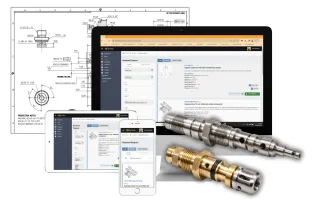
Qimtek reduces this friction. You upload your drawings once, outline your requirements, and allow suitable sliding head turning companies to quote. This approach saves time, improves visibility of market pricing, and gives you multiple options without repeated outreach.
It is particularly useful when:
- You are sourcing for the first time
- Your current supplier is at capacity
- You need competitive benchmarking
- Delivery timelines are tight
Instead of chasing quotes, you compare responses side by side and choose the supplier that fits your technical and commercial priorities.
What are the benefits of sourcing sliding head turning services through Qimtek?
Using Qimtek provides practical procurement advantages:
- Access to multiple UK sliding head turning suppliers
- Competitive pricing through direct comparison
- Greater flexibility when workloads fluctuate
- Reduced time spent on supplier research
- Improved visibility of available capacity
Sliding head turning is often used for high-volume, precision components such as pins, shafts, connectors, and medical or aerospace parts. When tolerances are tight and repeatability matters, having multiple capable suppliers to choose from gives you greater control over risk and delivery.
Qimtek supports both one-off prototype work and ongoing production requirements, helping buyers maintain supply continuity.
Can I deal directly with sliding head turning suppliers through Qimtek?
Yes. Qimtek is not an intermediary or broker. Once you receive quotes, you deal directly with the sliding head turning supplier you choose.
This allows you to:
- Clarify technical details
- Confirm tolerance expectations
- Agree inspection requirements
- Finalise delivery and packaging terms
- Build long-term working relationships
Direct communication helps reduce misunderstandings and ensures both sides are aligned before production begins.
If you are looking for CNC sliding head machining services in the UK, Qimtek provides a practical way to compare companies and receive competitive quotes.
Upload your drawings, review supplier responses, and choose the precision CNC machining service that fits your requirements.