
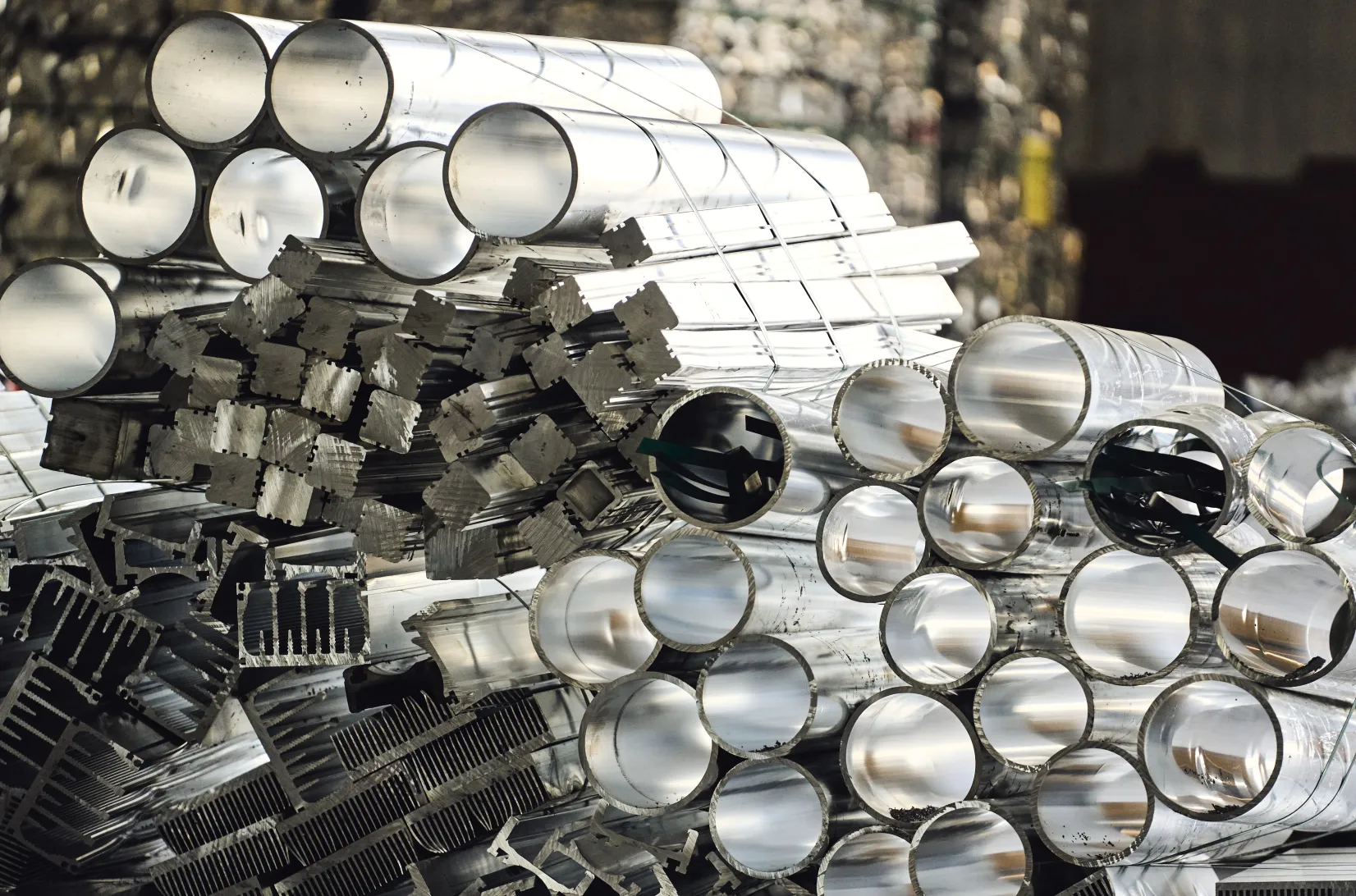
A changing geopolitical landscape means that the future of aluminium lies in recycling scrap, says Italian manufacturer Eural Gnutti.
The company specialises in the production of semi-finished aluminium alloy products. The company is ranked number one worldwide in the production of drawn bars and is among Europe’s largest producers of extruded bars and profiles.t says that international geopolitical tensions are putting increasing pressure on primary aluminium supply chains, forcing European manufacturers to rethink how they secure critical raw materials. Disruption in the Persian Gulf region, including the blockade of the Strait of Hormuz, has affected trade flows from an area that accounts for around 9% of global primary aluminium production. Damage sustained by major Middle Eastern production facilities, including Aluminium Bahrain and Emirates Global Aluminium, has added further strain, while the gradual tightening of sanctions against Russia has reduced access to a long-standing source of low-emission aluminium for the European market.
Europe’s shortfall in primary aluminium now exceeds 87% of its requirements, making annual imports of around 8 million tonnes necessary. Limited availability, combined with persistent uncertainty, has driven raw material prices sharply higher. Over the past year, prices rose from around 2,400 dollars per tonne to more than 3,500 dollars before easing at the end of June to around 3,100 dollars — still a level that remains challenging for industry.
Scrap aluminium moves up the European agenda
As primary aluminium becomes harder to source, secondary aluminium produced from recycled scrap is taking on growing strategic importance. The energy case is equally compelling: according to the International Aluminium Institute, producing one kilogramme of primary aluminium from bauxite requires an average of around 52 kWh of electricity, compared with just over 2 kWh for recycled aluminium. That represents energy savings of more than 95%, along with a substantial reduction in CO₂ emissions.
Yet scrap has also become a focus of international competition. Recent US trade measures, including 50% tariffs on semi-finished aluminium products and 15% tariffs on scrap, have created favourable conditions for purchases by non-EU operators. The result is a gradual reduction in availability for European manufacturers and a significant rise in prices, which in many cases now exceed London Metal Exchange benchmark levels.
Eural Gnutti has intensified its dialogue with European institutions over the past two years, contributing to discussions on industrial and trade policy affecting the aluminium supply chain. The company has sought to underline the strategic value of scrap aluminium for European competitiveness and the sustainable transition of industry. That position appears increasingly aligned with protectionist measures announced by European Commissioner for Trade and Economic Security Maroš Šefčovič, which are intended to limit scrap aluminium exports to non-EU countries and safeguard supply within the single market. If confirmed, the measures would mark an important shift in European trade policy, strengthening supply-chain resilience and supporting investment in the circular economy and sector decarbonisation.
Turning scrap into value
For Eural Gnutti, recycling is not simply a response to market pressures. It is a long-standing industrial choice that began in the 1990s and has been strengthened through continuous investment in technology, processes and expertise. This approach has enabled the company to combine sustainability with performance, while maintaining the quality and technical standards demanded by sectors including automotive, aerospace and advanced engineering.
One of the company’s key achievements is its ability to produce high-performance alloys from different sources of scrap. Eural Gnutti has developed processes that can use foundry scrap, scrap generated through its own extrusion activities — known as the ‘run-around’ process — and secondary material sourced mainly from Italian and European supply chains.
Thanks to this model, Eural Gnutti has avoided supply disruptions and maintained regular deliveries to customers. At the same time, the company is working to control the presence of residual elements, particularly lead. In developing lead-free alloys, the challenge is not only to eliminate lead and replace it with other elements, but also to use scrap from different sources that may contain elements not required in a specific formulation. The goal is to keep those concentrations within controlled limits, expanding recycling opportunities without compromising the performance or quality of the final product.
Lead content in aluminium alloys is already declining, and developments in the European regulatory framework, particularly the RoHS Directive, are expected to accelerate its gradual elimination. Although lead will remain present for several years in materials recovered from long-life products such as automotive components, standard recycling processes should progressively reduce its concentration until it becomes only a residual presence in future generations of alloys.
“Eural’s experience demonstrates how investing in innovation and research enables us to transform the challenges of the global context into opportunities for development and competitiveness,” says Giorgio Di Betta, Commercial Director of Eural Gnutti. “The measures the European Union is preparing to adopt can contribute to a more resilient and circular production system, creating the conditions for sustainable industrial growth in the long term.”