
Chip-breaking low frequency vibration (LFV) technology has transformed turning efficiency and productivity at Welsh subcontractor Harlech Engineering.
The company bought a Miyano fixed head machine and a Cincom sliding head machine from Citizen Machinery in 2023 and 2024 which both feature this technology.
The twin-spindle, double Y-axis-turret Miyano ANX-42SYYLFV turning centre fitted with a three-metre bar magazine replaced a slower, single-turret lathe of a different make. It resulted in significantly higher productivity, both through faster cycle times and fewer operations, usually producing components in one hit. It was, however, the LFV software that set the machine apart from a couple of similarly specified lathes on the market that Director Josh Mr Watkins was also considering.
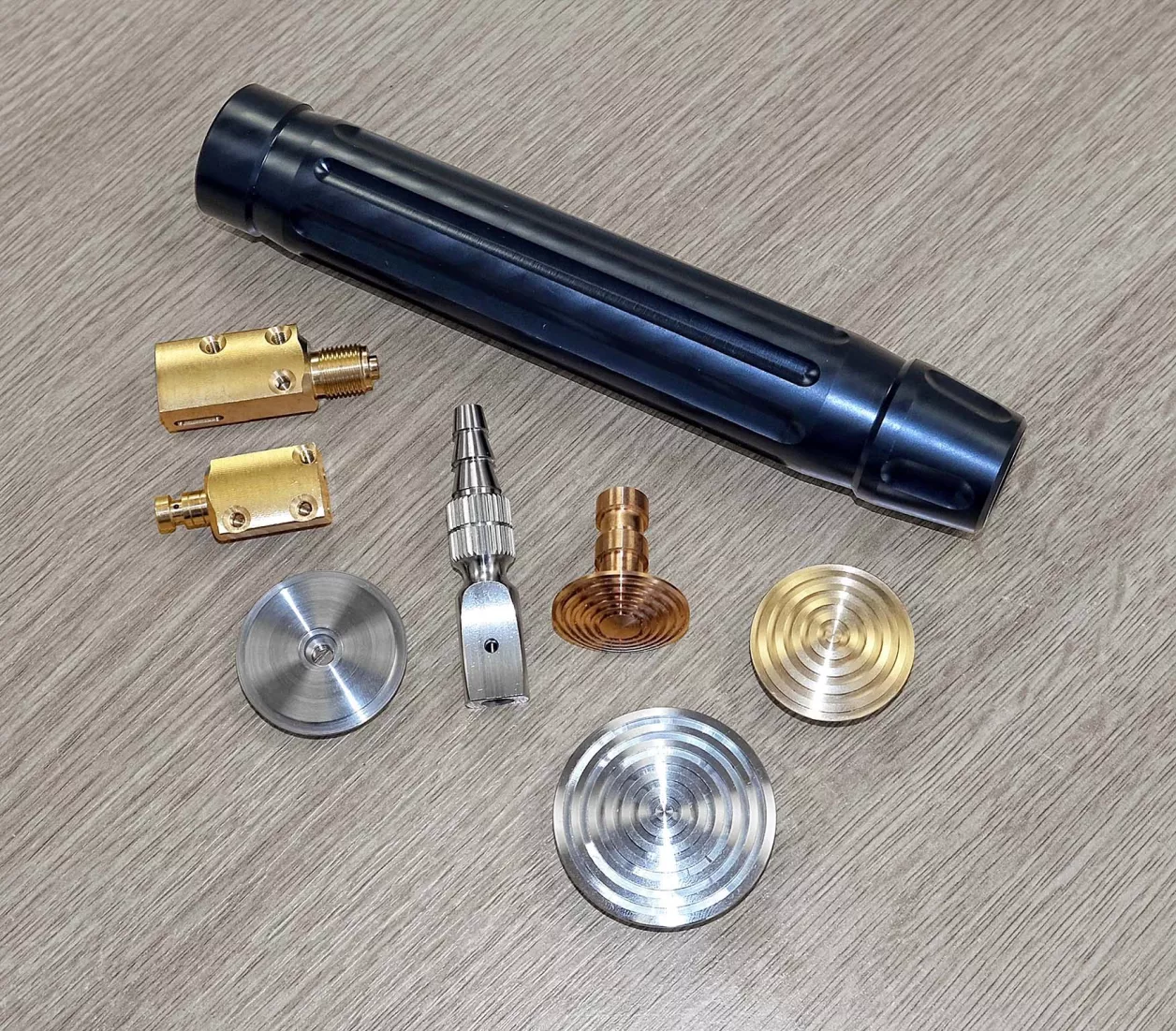
Before taking the decision to purchase, he asked Citizen Machinery's applications department in Bushey to carry out time trials on a couple of brass components he machines for the automotive industry. One was a dial assembly bracket that sits behind a car fascia.
It was taking 8 minutes to produce on a sliding-head lathe on which the spindle power and driven tool capability were limited, so further time on a vertical machining centre was needed to produce two tapped holes - and the part had to be handled and reset for the second operation. The same component comes off the Miyano complete in 4.5 minutes. There are four other brackets in the same family that similarly benefit from faster production.
A second type of shorter bracket that used to be produced in one hit on a sliding-head lathe was also programmed and proved out on an ANX in Bushey. It likewise is being produced faster on the fixed-head machine in Swansea, with the added benefit that Mr Watkins has been able to free up the slider for other, more appropriate work.
Free-cutting brass does not require any special attention in regard to chip-breaking, but other materials do, such as 316 stainless steel, which accounts for more than three quarters of the work going through Harlech's shop floor.
Mr Watkins commented, "Historically we have used two other types of chip-breaking software on sliding-head lathes, but Citizen's LFV is more effective than either.
"The function is easy to incorporate into a cycle, as it simply requires a single line of G-code to switch it on or off."
Harlech also uses LFV when producing copper studs for an outdoor furniture manufacturer. This malleable material is notorious for generating stringy swarf that wraps around the tool and workpiece, risking damage to both. With the Citizen chip-breaking software switched on, the ribbons are reduced to shorter chips that can be evacuated as easily as those produced when cutting brass.
The studs are turned longitudinally and undergo a lot of face turning to produce a dome shape and face grooves. It is a long-running contract that in the past has been fulfilled on both fixed- and sliding-head lathes having ineffective or no chip breaking software. Cycle time is approximately two minutes and after every 10 parts it was previously necessary to stop the machine to clear the working area of copper ribbons. Now the job runs unattended into or even through the night on the ANX.
Mr Watkins advised, "This is a big help, as the studs are required in batches of 1,500. The microsecond intervals of air cutting that breaks the swarf into fine chips lengthen this exclusively LFV cycle slightly, but on the plus side we are able to take deeper cuts, so there is little difference overall. Best of all it just works, without any fuss or tweaking of parameters."
Mr Watkins concluded, "We have been a family-run business since 1990. Toolmaking and press working used to account for a majority of our turnover, but subcontract turning and milling is more than two-thirds of our business now. We mainly serve the medical, automotive, domestic appliance, electronics and rail industries.
"We have been investing heavily over the past eight years in modern, multi-axis CNC plant to become ever more efficient. I must say, however, that the latest two Citizen lathes with LFV have taken our productivity to a whole new level."
Photo: A selection of components turn-milled by Harlech on its Citizen lathes.