
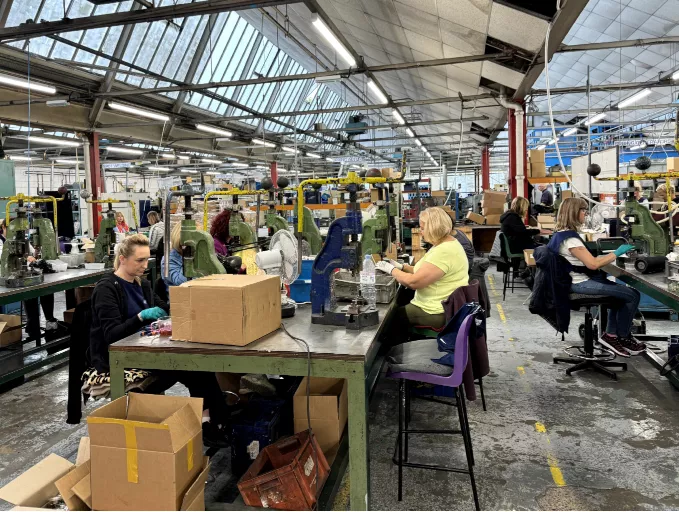
Aston University is working with Redditch-based manufacturing firm, Protaform Springs and Pressings Ltd, on a digital transformation of its production processes in a pioneering project that could provide a blueprint for similar companies across the UK.
Through a Knowledge Transfer Partnership (KTP), researchers from Aston University will enable Protaform to reap the benefits of both Industry 4.0 advances – which include innovations powered by automation, big data analytics and smart systems – and Industry 5.0 approaches, a rapidly advancing area of operations management research which place the wellbeing of the workforce at the centre of the production process.
The team will use the latest smart sensors and micro-controllers to enable automated data collection from Protaform’s manufacturing processes. They will create real-time, data-driven dashboards, enabling factory data to be accessible from any location worldwide. They will also use a whole systems approach to review and analyse the human-machine interactions within the company, identifying key success factors and areas for further optimisation.
The project will enable Protaform to implement more effective production planning and control its end-to-end manufacturing, creating a transformation in their business and management processes to drive efficiency improvements and deliver sustainable growth. Enhanced efficiency will prepare Protaform for rapid growth, ensuring it continues to reduce waste and energy usage and shrink its carbon footprint.
Paul Taylor, group finance director at Protaform, said: “The team at Aston University has been great to work with and very proactive.
“They’ve taken the time to understand our needs properly, rather than making assumptions about what we do and where we want to go. That’s been very reassuring and makes a strong foundation for a productive partnership.”
Professor Ben Clegg, previously head of operations and information management at Aston Business School, is leading the project. He said: “Implementing a new piece of technology or digitising a machine is doomed to fail, unless you rethink strategy, processes and address people’s attitudes towards change.
“A factory is a complex system, and it’s the interaction between different parts of the system – the people, the machines, the data, the regulatory frameworks – that provide opportunities for success.
“This is why, for a project of this kind, you have to take a whole systems approach.”
An award-winning innovator, Professor Clegg has worked extensively with organisations to increase their productivity through smarter use of people, processes and technology. He has developed a novel methodology, Process Oriented Holonic (PrOH) Modelling, which has been successfully adopted by companies through previous KTPs. PrOH Modelling is used to define systemic problems within organisations and support knowledge-based decision-making and implementation to tackle those problems.