
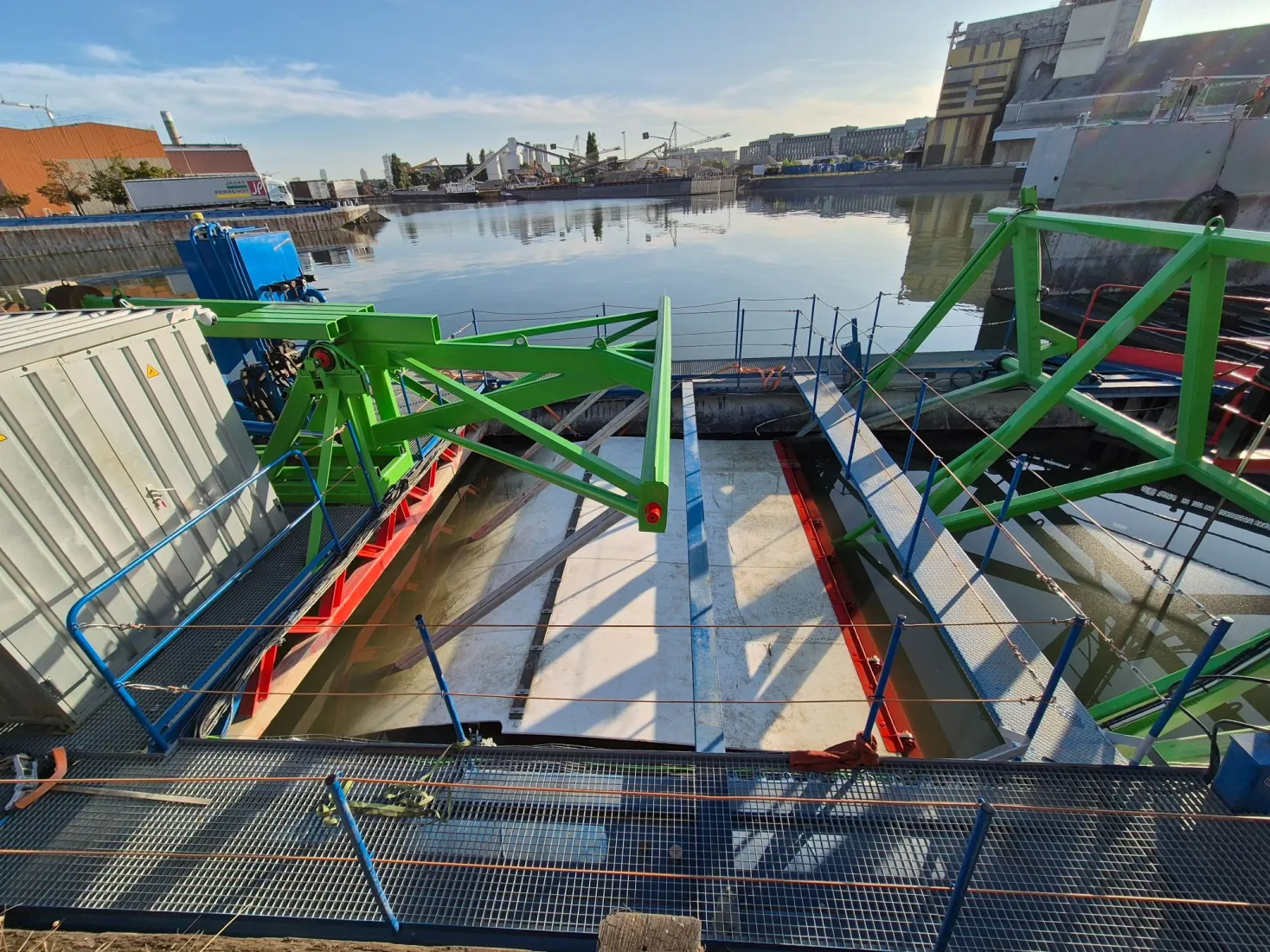
From flight to fasteners, nature has long shaped engineering. French startup EEL Energy adopted this approach in its designs for machines to harness energy from natural water currents.
EEL Energy specialises in hydrokinetic machines and has developed a patented undulating membrane inspired by the movement of fish tails. The biomimetic design captures kinetic energy from water currents and generates electricity sustainably without disrupting aquatic ecosystems.
"Hydrokinetic generators can produce energy constantly throughout their life by leveraging the water currents in rivers or tidal flow. The predictability of hydrokinetic energy generation is needed by communities across the globe in a green revolution that threatens to leave the neediest behind,” explained EEL’s CEO Xavier Peroutka.
However, as EEL brought hydrokinetic energy production to market, it faced a demanding underwater environment that required materials able to withstand extreme stress and pressure.
Hydrokinetic generation exerts up to 30 times more mechanical stress on equipment than wind energy production.
To address the challenge EEL worked with Exel Composites to enhance the resilience of EEL's membrane and refine its performance for harsh underwater conditions.
Initially, EEL reinforced its membrane with fibreglass, but the design revealed a critical flaw: delamination. Under cyclic loading, large deformations induced high strains, causing the membrane layers to separate and allowing water to infiltrate.
A membrane failure during operation could jeopardise the entire hydrokinetic system, so EEL needed a solution able to withstand continuous mechanical stress.
Exel used multiple layers of discrete carbon flat profiles developed for wind turbine applications. Stacked into beams and integrated into the membrane, the carbon fibre flats sit at 50, 80 and 100% of its length. This prevents bulging, limits deformation and helps the membrane maintain structural integrity.
"The key to success was recognising that our carbon fibre flats, originally designed for wind turbine blades, could be repurposed for EEL's hydrokinetic membranes," explained Neil Dykes, research and development manager at Exel Composites. "These flats provide the stiffness and strength required to withstand harsh wind conditions, making them ideal for this application."
Exel's carbon fibre composites (CFRP) were essential to the membrane’s success. With an E-modulus of approximately 120 GPa, CFRP is far stiffer than traditional glass fibre composites (GFRP), helping the membrane retain its shape under stress and avoid deformation or energy loss.
CFRP’s tensile strength of 2500 MPa, compared to GFRP's 1000 MPa, enables it to withstand greater forces. Its compressive strength, at 1500 MPa, also exceeds the 600 MPa typical of GFRP. Combined with excellent fatigue resistance, this durability helps the membrane handle up to 6000 full reversal cycles per day and maintain efficient energy capture over the long term.