
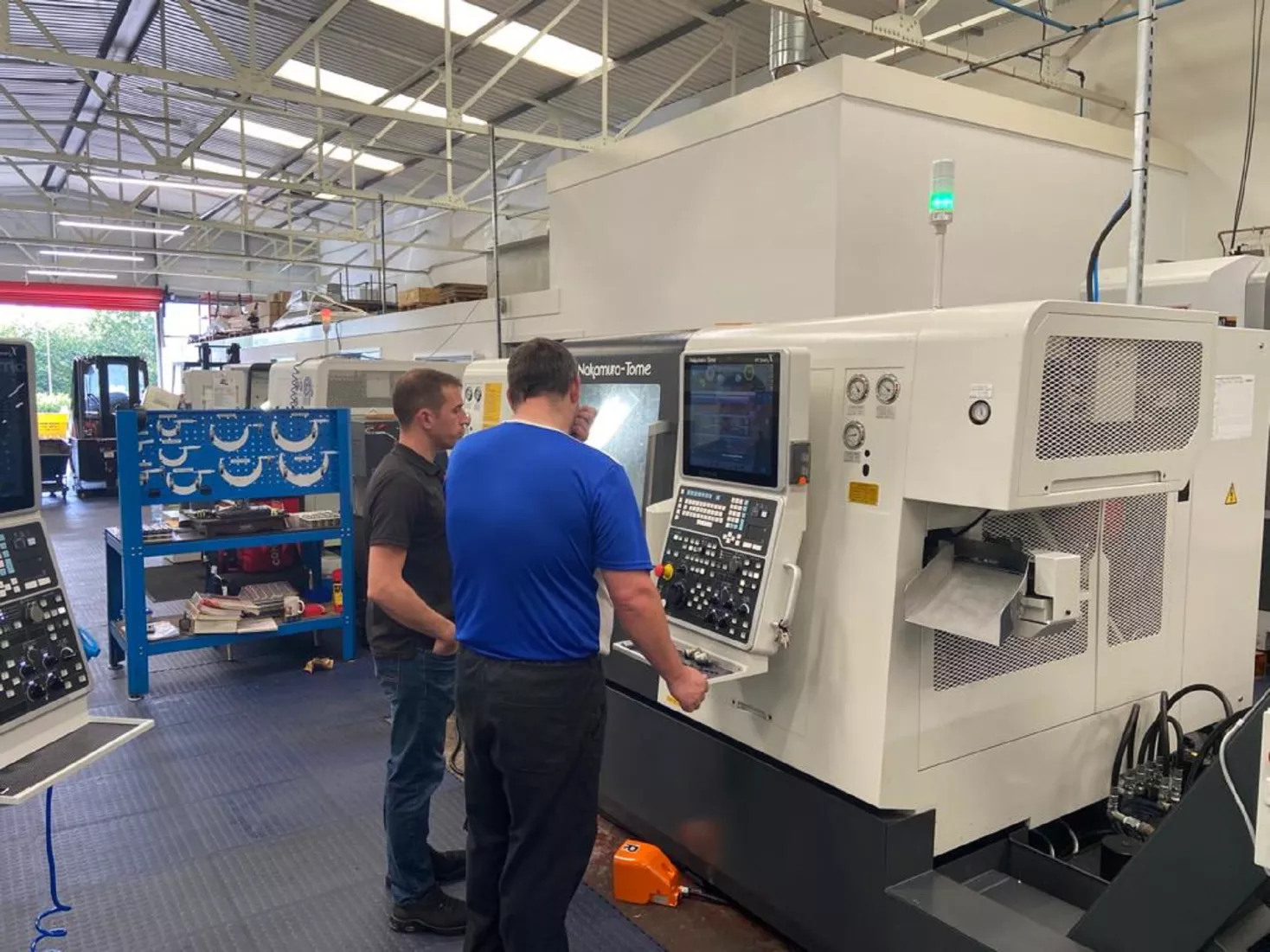
Four multi-tasking turning centres are helping Quest Precision win offshore industry machining work from Chinese competitors.
Serving customers in the oil & gas, electronics, automotive and aerospace industries, ISO9001:2015 certified Quest Precision machines everything from simple parts to the most complex of components. It is this requirement for one-hit machining of complex parts from challenging materials that led to the installation of its first Nakamura-Tome multi-tasking turning centre in December 2019, a twin-spindle twin turret WT150II. The impact of the Nakamura-Tome WT150II resulted in a second machine being installed four months later and this has now been followed by two more machines that were delivered at the end of July.
Before Quest installed its first Nakamura-Tome WT150II, it was machining autonomous valves for the oil and gas industry in five operations on four machine tools. The production of the complex 2-inch diameter Inconel 718 valves that control the flow of oil from wells was time-consuming and not cost-effective enough to compete with an existing Chinese supplier. To win more of the business from the overseas supplier, Quest needed to increase productivity and reduce costs – the answer was the Nakamura-Tome WT150II.
Discussing the situation, Quest Precision’s Managing Director, Mr Gordon Deuchars says: “There are 25-30 different valves in the family of parts and for us to win more business, we had to increase throughput and reduce costs to be cost-competitive with China…The first two machines made a huge impact and brought us significantly more business. To support the subsequent growth and do more R&D work, we bought the next two machines.”
Depending upon the valve variant, the majority of valves were processed in 2-4 hours on four machine tools with an additional 25% set-up time across the numerous machines. Running everything from prototypes right through to production runs of 1000-off, producing such volumes on the existing machine tools was unfeasible. The first twin-turret twin-spindle Nakamura-Tome WT150II immediately alleviated the situation, the second machine solved it and machines 3 and 4 are helping the company cope with its influx of new orders.
One hit machining on the WT150II initially reduced cycle times by 50% to 1.5 hours whilst freeing capacity and labour requirements throughout the shop floor. As Gordon recalls: “The WT150II made such a difference to our production and set-ups that we ordered a second machine within weeks. Instead of using multiple machines and up to five staff on the valves, we have one operator running the two Nakamura’s. With one staff member running the machines on days and another on nights, the first two WT150II machines increased our productivity by 500%, making us cost-competitive with China. They also reduced our tooling costs considerably due to the machine set-up and rigidity. The latest two machines have immediately mirrored the success of the first two.”
The result of investing in the first two Nakamura machines significantly increased business from this particular offshore customer – and this is why two more WT150II machines have followed. As Gordon recalls: “The challenge this offshore customer had with supply from China was proximity. Proximity made any R&D work, amendments or part inspection an issue. Now, they can visit our facility to discuss projects, look at our production methods and equipment and investigate opportunities to enhance and develop their product lines with a local supplier and that is exactly what they are doing.”
“We started production on what they called the Mach 1, 2 and 3 valve designs. Now, we are fully integrated into the customers' R&D infrastructure, and we are working closely with them on the development of the Mach 4 valve. Since investing in the Nakamura machines, we have won much more business from this customer and the Nakamura’s are 95% dedicated to producing and undertaking R&D work on the inconel valves.”