
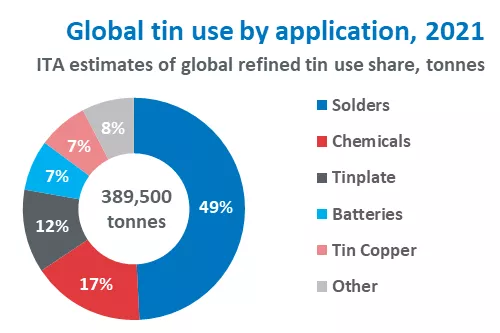
The latest research by the International Tin Association shows that use of the refined metal grew 7.6% in 2021, with nearly half used in solder, with solar ribbon emerging as a major new application.
The total usage was 389,500 tonnes with a strong recovery to pre-trade war highs, but inflation is expected to impact on demand in 2022.
Solder still accounts for the largest global share of tin use, increasing slightly to 49% in 2021. Global average growth of refined tin use in this sector was 12.2%. 2022 forecasts reflect the impact of inflation on consumer segments: an average decrease of -3.7% is expected globally, with a larger effect in China.
Solar ribbon now represents 10% of solder production and is emerging as a major new use. Respondents are still optimistic about longer-term prospects for increased use in solar, 5G, electric vehicles, and other new technologies.
The average proportion of lead-free solders in electronics grew to 86% globally in 2021, up from 80% in 2020. 65% of tin use globally in lead-free solders was specified at <100ppm Pb, down from 82%. The trend toward higher-purity, lower-lead specifications in tinplate continued in 2021, as 95% of refined tin specified by reporting participants was <50ppm Pb, a marked shift from 79% in 2020.
In chemicals, tin use by survey participants increased by 4.0% in 2021 and was forecast to grow by 4.9% in 2022. Market dynamics in this sector have been complex through the pandemic, with both positive and negative effects in different sectors. This data reflects broad recoveries continuing through 2022, with China markets weakened by its ongoing property crisis.
Pandemic-boosted tin use growth in tinplate markets continued through 2021 at 5.2%. Participants forecasted this higher baseline to be maintained with a modest 0.3% growth in 2022. Some turbulence can be expected with both positive and negative effects possible in relation to forecasted food market disruption.
Lead-acid battery tin use markets reflected a significant pandemic boost to e-bike use in China as well as some recovery in auto markets, growing by 6.9% in 2021 and forecast at 7.6% growth in 2022. Tin intensity increases in start-stop hybrid vehicles and other advanced batteries are also supporting growth. Markets will continue to grow steadily in the medium-term despite ongoing development of lithium-ion and other technologies.
Tin use in tin-copper markets increased significantly in 2021, with global growth of 15.8% reflecting pandemic recovery supported by new technology markets including electric vehicles and new electrical infrastructures. Negative growth forecasts for 2022 at -9.2% are mainly based on the cost-of-living crisis.
Other traditional metal product markets averaged a -4.4% decline in 2021, largely rebalancing a large 2020 boost from float glass installations in China. Outside of China, markets showed some recovery. Markets are expected to resume a steady 1.2% growth in 2022.