
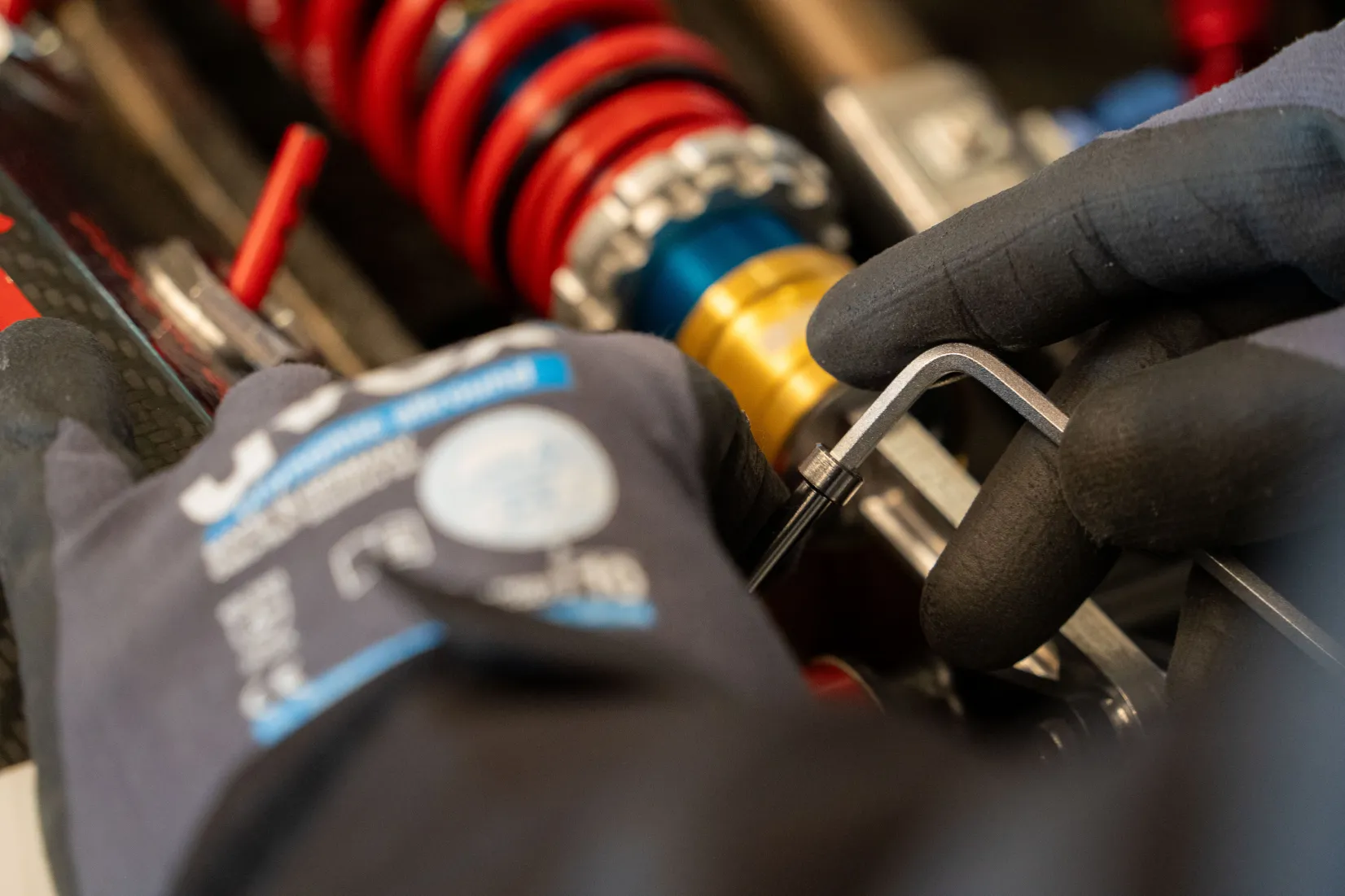
Patrick Faulkner, Lead Engineer at Accu, looks at why titanium is an important material choice for fasteners and fixings in a number of different industries.
“Titanium is an exotic metal that has a unique combination of mechanical, chemical and physical properties. Number 22 on the periodic table, Titanium is a silver-coloured metal that occurs naturally on Earth – in fact, it is the ninth most abundant element. However, it was not used for industrial purposes until the 20th Century.
Performance
Titanium offers exceptionally high mechanical performance. It is popular for medium to high stress applications, where weight and durability are crucial.
Titanium components such as hex nuts, socket cap screws and washers are widely used across demanding industries including medical, aerospace and oil and gas. Their high strength-to-weight ratio, low density and exceptional resistance to corrosion, particularly in saltwater and bodily fluids, make them ideal for extreme environments.
In the oil and gas sector, titanium hex nuts are deployed in offshore tubular assemblies, while in medical applications, socket cap screws and washers are used in surgical instruments, prosthetic devices, bone replacements and dental implants. The aerospace industry also relies on titanium components for their strength-to-weight ratio in extreme conditions.
Renowned for its exceptional properties, titanium delivers a unique balance of strength, lightweight, corrosion resistance and the ability to withstand extreme temperatures, making it an indispensable material in high-performance engineering.
Key benefits of titanium fasteners
One of the main benefits of titanium fasteners is their exceptional corrosion resistance, even in the harshest environments. Titanium resists degradation from salt water, chlorine solutions and some industrial chemicals, making it especially valuable in aerospace, marine and chemical processing environments, where long-term durability is crucial.
Titanium also has an outstanding strength-to-weight ratio. It’s 45% lighter than steel and also up to four times stronger than stainless steel fasteners. This allows for substantial weight savings without compromising on mechanical performance, an essential factor in high-performance industries and the manufacturing of aerospace assemblies.
In addition, titanium has a high melting point of 1600°C, which means it maintains its structural integrity and mechanical properties even at elevated temperatures. This makes titanium fasteners ideal for high-heat applications such as engines and exhaust systems.
The material is also non-toxic, making it safe for use in medical applications, and non-magnetic, which is a crucial consideration in applications where magnetic interference must be minimised, such as electronics systems.
Titanium fasteners vs stainless steel fasteners
Stainless steel screws are a popular choice when it comes to choosing engineering components. As a multi-purpose metal, it is highly versatile, rust and corrosion-resistant, making it a popular choice in the marine and food industries.
However, titanium fasteners offer a higher tensile strength than stainless-steel fasteners. Titanium fasteners are also more expensive than alternatives like stainless steel fasteners. However, their use is often justified when the specific demands of a project, such as weight reduction, corrosion resistance or high-temperature performance, make it worth the additional investment.
Grades of titanium fasteners and fixings
Titanium fasteners are available in a number of different grades, each tailored to the particular demands of use in different applications.
Titanium grade 2 is categorised as a commercially pure titanium, which means it contains a minimum of 99% titanium with small amounts of oxygen and other elements. This grade offers an excellent balance of strength, weldability and corrosion resistance and is often used in chemical processing and marine applications. It’s also twice as strong as 316 stainless steel.
The most common titanium alloy used in aerospace applications is grade 5. Combining high strength and corrosion resistance, titanium grade 5 contains 6% aluminium and 4% vanadium, suitable for high-performance applications where fasteners need to maintain integrity under high stress and fluctuating and extreme temperatures reaching over 316°C.
Grade 7 titanium fasteners are the most corrosion-resistant and are suitable for advanced applications, such as in high-stakes motorsports.
What industries use titanium components?
The material’s unparalleled strength-to-weight ratio, combined with its corrosion resistance and high temperature stability, makes titanium an ideal choice for demanding sectors such as aerospace, chemical processing, defence, dental, medical, marine, offshore oil and gas industries and motorsports.
In high-performance automotive applications, for instance, large components like swing arm bolts and axles can be replaced with titanium alternatives to achieve substantial weight savings without compromising strength or durability.
An example of titanium’s ability to achieve weight savings is its use by AMZ Racing, an organisation consisting of engineering students dedicated to designing, building and racing high-performance electric race cars.
AMZ Racing, a sponsored team of Accu, earned a Guinness World Record with its Mythen WR 2023 electric race car, achieving the fastest 0–100 km/h acceleration for an electric vehicle. The car reached this milestone in an astonishing 0.956 seconds, making it the first electric vehicle in history to break the sub-one-second barrier.
The Mythen WR model had previously been used in 2019, but it underwent extensive weight reduction ahead of the 2023 record attempt. A key part of this effort involved incorporating Accu titanium screws, chosen for being lightweight and able withstand high temperatures while delivering exceptional strength. These titanium components played a critical role in reducing the car’s overall weight from 162kg to 137 kg, directly contributing to its record-breaking performance by minimising mass and maximising speed.
By understanding the key properties, different grades and appropriate applications of titanium fasteners, engineers and designers can make informed decisions that elevate the performance and longevity of their projects.”
Author bio: Patrick Faulkner is the Lead Engineer at Accu, a supplier of precision engineering components. With years of experience in providing high-performance solutions, Patrick works closely with clients in a range of industries, from prosthetics to aerospace, to help bring innovative ideas to life.
BACK TO ENGINEERING CAPACITY NEWS PAGE